Wednesday, March 31, 2010

In time of terrorism, Pakistan seeks peace in Sufism

The following article appeared in the online publication South Asia Post, Issue 108 Vol IV, March 31, 2010

AT the first sight, it indeed appeared a bit intriguing to me to receive an e-mail invitation on 6th February for, 'International Conference of Writers & Intellectuals on "Sufism and Peace" to be held in Islamabad from March 14-16, 2010. That it was being organised by Pakistan Academy of Letters (PAL)/Government of Pakistan seemed OK but it was the name of Mr Fakhar Zaman, Chairman of PAL which was reassuring and made me inclined to think positively about my participation in it. Fakhar Zaman has been, like an inspired and dedicated Sufi, steadfastly pursuing the ideas of nourishing Indo-Pak forums for friendship and creative interaction.

The tougher question, of course, seemed to be the timing of the conference - the Sufi Discourse under the alarming shadow of terror looming large on all horizons in Pakistan!

While keeping fingers crossed till the last about availing this tempting opportunity of revisiting Islamabad after more than fifteen years, I soon started pondering over all the aspects of the topic of the Conference. I could recall how as a school child of seven, I was taken by my father to the dim lit Dharamshala for an evening of Sufi music by eminent Qawwals of Malerkotla who had come to perform during the Lohri festival (1952) in our village; all that I still remember is that they were singing one of the 'Qaafis' of Bulleh Shah with its refrain, 'Aap Yaar binan nee Rabb Rehnda...God cannot live without a devoted lover!' After a few years, I chanced to find a book at home, with its sides eaten by the white ants: it turned out to be, 'Rubbayiyat of Omar Khayyam' with a remarkable poetic translation in Panjabi with full rhyme by S. Gehal Singh, a Retired judge. I could soon learn several of them by heart - and can recite even today !

Later while doing my Intermediate in the Govt College Malerkotla during 1959-61, we had a textbook of Panjabi poetry titled, 'Purana Makhio', ie 'Old Honey'. Prof Iqbal Singh, a short and rotund Sardar migrant from District Jhang with his typically pronounced accent of Panjabi, particularly vowel 'o'-a tingling for us Malwais of South of Sutluj - taught us poetry of Baba Farid, Bulleh Shah, Shah Hussain, Sultan Bahu, Baba Vajid, etc, explaining at length the meanings and contexts. All that has endured with me and how ecstatic to listen that poetry sung by talented singers like Jagjit Singh (class fellow in 1961-63), Hans Raj Hans, Jasbir Jassi etc. While doing my MA in English in Goverment College Ludhiana, we knew from friends doing MA in Panjabi how Prof Gulwant Singh was an authority on Sufism and Prof Pritam Singh has done a scholarly research on Baba Farid. After joining Indian Foreign Service, my first posting was to Iran and a rare satisfaction for me was the opportunity on 22nd March, 1977 to have made pilgrimage to Omar Khayyam's mausoleum in Nishapore. I could visit monuments of Hafiz & Sheikh Saadi much later in 2000. In Spain, I could visit the monastery of Saint Teresa of Avila (1515-1582 AD), the Christian soul - sister of celebrated Sufi saint Rabiah of Basrah(717-801 AD)

The terrorist’s attacks in Lahore on 12th March and anxiety expressed by family and friends in this context notwithstanding, I was able to take them into confidence and boarded evening flight to Lahore on 13th March, overruling fears by my wife, reminding me of lines in Julius Caesar. I was immensely relieved to meet at Indira Gandhi International Airport other friends including author Pran Neville (famous Lahori); former VC Jamia Millia Shahid Mahdi;the veteran of AIR and eminent Urdu poet Zubair Rizvi; Satish Jacob of BBC fame who were also braving to travel to Islamabad. We were soon in legendary Lahore and were able to reach Islamabad before the change of date. The made to order beautiful capital of Pakistan is often described in words of poetic wit including its splendid isolation from the mainstream hustle bustle of life in Pakistan. The security 'Bandobast' was writ large all around - the 'masti and Josh-o- khrosh' was clearly missing, strikingly reminding me of period of long night of terror in our own Panjab. How long would the shelf life of terror be for our neighbour? I deeply felt like offering prayers to all the Sufi saints of the subcontinent for peace within and progress around for all the people of this ancient civilization!

Coming to the Conference, Mr Fakhar Zaman and his dedicated team of PAL colleagues presented a picture perfect in terms of courtesy, hospitality and facilities for delegates of more than thirty countries. The Pakistani writers and academicians were well represented. About 40 papers were presented on different dimensions of Sufism and Peace. Fakhar Zaman had himself set the parameters in his inaugural address dwelling on the role players by writers in the revolutionary progressive movements in the of world, including Pablo Neruda, Andre Malraux, Camus and Faiz in Pakistan. The strong delegation of Sweden led by eminent poet and peace activist, Peter Curman, mooted the idea of, 'Peace Cruise in the Indian Ocean' of writers and intellectuals on the similar cruises earlier in the Baltic, Black and Aegean. In a departure from scheduled programme and amid tight security, the delegates were hosted and addressed by President Asif Ali Zardari at the President's House. Sardar Asif Ali, the influential Minister of Education, also participated in this function.

Mr Zubair Rizvi of India who was not listed to present any paper but was specially asked to speak gave an eloquently detailed account of of the strong manifestations in India of the Sufi inspirations in various realms of arts like dance, theatre, painting, music, etc. and mesmerised the audience by concluding with his popular poem, 'Aman ka Geet' Mr Tulsi Diwasa Joshi of Nepal was also listened with deep interest for poetic presentation profused with his poetry in English. Mr Salman Taseer, Governor of Panjab made an impressive address, qouting Allama Iqbal and other Sufi saints in the morning of of 16th March. Mr Mahmud Erol Kilik, a prominent Turkish scholar on Tasawwuf, presented a competent paper highlighting contribution of Ibne Arabi as a Sufi philosopher. I was suddenly asked to be in the presidium in pre-lunch session. I shared my intellectual and personal encounters of the Sufi kind, particularly highlighting the unique contribution of Sufi saints in the the spiritual and literary heritage of Panjab and that Baba Farid's poetry has been given the singular honour of inclusion in the Sikh scripture Guru Granth Sahib. There were several lady scholars who read interesting papers referring to message of love of humanity by Sufis irrespective of all divides. The cultural show with by students of University of city Gujrat on 14th March was impressive with background Panjabi Sufi poetry and, most surprisingly, Amrita Pritam's celebrated poem on Partition, 'Ajj Aakhan Waris Sha nun...I appeal to Waris Shah.’

The media attention to the Conference on a daily basis, perhaps as some calculated measure, seemed moderate though several younger TV reporters were at the venue and recorded interviews, particularly with the Indian participants to be telecast later. The TV channels seemed quite flourishing in terms of live discussions on current national issues. Mr Fakhar Zaman, in a briefing on 18th February, had said that Mohtrama Benazir Bhutto Shaheed had desired in her address to the International Conference on 'Literature, Culture and Democracy', held in Nov 1995 that such a Conference should be held, 'to highlight Pakistan's soft image in the world'.

The observers have pointed out that the rising tide of extremism and terrorism in Pakistan since 2007 had led even the Musharraf regime to turn to Sufism to counter 'Talibanized Islam' particularly after army action on the Red Mosque in Islamabad in July 2007. The PPP led Govt since February 2008 has two prominent Feudal Pirs in PM Youssaf Reza Gilani and the Foreign Minister Shah Mahmud Qureshi. The PPP Govt has revived the National Sufi Council and has been seen inching closer to Barelvi movement and sectarian groups opposed to Deobandis and the Taliban. It is pointed out that the number of Pakistani madarasas had grown from 250 in in 1947 to around 10,000 in 2002 with over 1,50,000 students attending them; currently their number is 13,000 to 15,000 with highest growth in southern Panjab. The cumulative Saudi support to these madarassa has been estimated in the range of U$ 70 billion. It has been observed by the knowledgeable sources that while the Wahhabis make up only 2% of world's Muslims, they have been using their huge oil revenues to marginalise moderate and tolerant Sufi philosophy. It is also noted that while some 60% of Pakistanis are 'Barelvis' with moderate interpretation of Islam have only 13% of madrasas, 19% 'Deobandi-Salafi-JI' conrol over 70% of the madrasas in Pakistan. According to Y. Sikand, an eminent scholar of Islamic affairs, in some Sunni-Deobandi madrasas, Jihad (Holy War) against Shias is as much a religious duty as jihad against non-Muslims: any space for culture of dialogue simply does not exist.

While in modern epoch, the US/West has to share some historical blame for supporting autocrats/tyrants in the Islamic world as well for having 'mid-wifed' the one dimensional Islamic radical sect to spite the former adversary, the Soviet Union, time has indeed come calling the Islamic political & spiritual leadership around the world to rise to the occasion to face the new millennium with the pristine truth and a fresh outlook. Islam, as the largest Faith of Humanity with the most magnificent civilizational contribution in the history of mankind, has to play a vital role in furthering the cause of peace and prosperity for race of Adam inhabiting this planet. To quote one of the verses of Maulana Jalal al-Din Rumi (1207-1273 AD) in which God tells Moses:

Thou had been sent by God, O Moses Not to divide but to unite His creatures.

Tuesday, March 02, 2010

Lost and Found in World of Books


The 19th Biennial New Delhi World Book Fair (NDWBF), was held from 30 January to 7 February, 2010, in the sprawling Pragati Maidan. The National Book Trust Directory stated that the Fair, spread over 42,000 square metres, with over 2,400 stalls and stands by 1,200 participants including 35 foreign exhibitors from 15 countries, 'showcased the diversity of one of the largest book industry in the world.' It was highlighted that the 19th NDWBF, in view of the capital hosting the Commonwealth Games during the year, had a special Theme Pavilion of books on various aspects of Sports, 'Reading our Common Wealth.' The Pavilion hosted several sports legends including Milkha Singh. There were exclusive Youth and Children Pavilions as well as the 'Collective Exhibit on and by Pandit Jawaharlal Nehru.' As per practice, many eminent writers were felicitated at functions of book launches, discussions on publishing and related issues.

Since returning to Delhi in December 2003, after a stay in seven different capitals spanning a period of over 21 years, I have been again an avid visitor to the last three editions of the NDWBF in the company of Vijay Mangla, my durable librarian friend of more than four decades. This year, I first visited the fair on Wednesday, 3rd Feb for a very special reason: to pick up the copy of Baba Pramatama Nand authored book, 'Gajjan Bilaas.' Why was the Book so very significant for me? Well, the family elders had always told me that I was the veritable golden apple of his eyes Pramatama Nand Ji whose dearest great-grandson I was. And it was he who had given me my name, even before I was born! He was reputed to be the most eminent scholar and Ayurved-physician of the area. He was the most revered Guru-Pitamah of my father, Vaid Haridial Nand, himself a distinguished classical scholar and Ayurved practitioner!

As a child of four I had mounted on the strong and broader shoulders of my eldest maternal uncle, performed the duty of honour to the esteemed departed by waving the sacred 'Chaur' - the fly-whisk at his 'Bavaan' - funeral procession - on October 19, 1947. My real great-grandfather Baba Giata Nand Ji, elder brother of Pramatama Nand Ji, passed away on August 20, 1951 and I had performed the same duty again. The only sister of my five great grand fathers, Chetan Kaur by name, called Bhua Ji by the entire village, had been residing in the parental home since all the members of the family of his in-laws who were doing business in Calcutta had died during the epidemic of influenza in 1918. She had survived being on a visit to Panjab and lived long enough to expire in 1960. She had been telling me all the long tailed tales of 'jagg beetian and hadd beetian' - the stories of others in the world as well as those of personal and family experiences.

Coming back to the book, 'Gajjan Bilaas', literally penned in the early thirties of the 20th century. It refers to the chronicle of the first Patriarch of our family, Baba Gajjan Shah, also called Laal Singh / Mastaan Singh, a much admired and sought after saint of great spiritual attainments of his time. The book, quoting verifiable sources like the orders of rulers of states of Malerkotla, Patiala and Maharaja Ranjit Singh, determines that Baba Ji lived from 1734 to 1839 AD. The author has adopted the traditional, 'Janam Sakhi' style of narrating the main events - including miracles of spiritual powers - of the extraordinary life his great grandfather whose parents of nobility had been blessed by Guru Gobind Singh Ji. The language of the book, originally of large sized 470 pages, in Gurmukhi script, in impeccable hand of Pramatama Nand Ji, is exalted Hindi Sant-Bhasha with frequent resort to classical poetic forms of Doha (couplets), Chaupai, Kabitt etc. I had been hearing and 'overhearing' so much about this family chronicle from my father, grandfather and great grandaunt Chetan Kaur ji, particularly quoting poetic pieces. It may be mentioned that Baba Pramatama Nand Ji had died issue-less, and while all his properties and material belongings etc were claimed by a nephew, the various books, medicines, music instruments etc were claimed by my father (Born August 30 1920) who had been studying at the feet of his Guru-Pitamah since his early life.

It was in 1992, 14 years after passing away of my father, that I could persuade my family that a few photo copies from the original 'Gajjan Bilaas' be made. The first copy was placed at the Samadhi of Baba Ji (photo on title of book); one was given to Prof Pritam Singh Ji of Patiala who knew my father and one has been travelling with me across continents. It has been indeed a brave task on the part of Dr Gurprit Kaur, Assistant Professor of Panjabi in PU, Chandigarh, a daughter in-law of Baba Ji's village, to have undertaken the task of 'Translation and Edition' of this significant work in the evolution of prose of Panjabi. I do not want at all to belittle the tons of labour of love involved in imparting a contemporary readable form to this work compiled more than four generations earlier, but would have certainly wished a much more rigorously researched approach in placing the work in its more appropriate and broader context - historical, literary, poetic and above all spiritual. The book begins with an erroneous sentence and is replete with incorrect 'Pad-nikherh' separation of words written in old all-joined style. Some portions of the original text have been omitted without giving any explanation in the preface.

The Deras have been currently more in the news for dubious deeds and divisive issues, the life and work of a saint-scholar-physician like Baba Pramatama Nand Ji certainly tell us golden tales of institutions comparable to Academies of celebrated Greek philosophers. Long before the British schools for the common people, more so in native states like Malerkotla, appeared on the scene, the personalities of the calibre of Pramatma Nand Ji were using their own resources to impart a multi-purpose education including classical languages, medicine cum pharmacy, instrumental / vocal music, not to speak of Yoga, horse riding, chess and even cooking! I am proud of my father who could come upto to all expectations of his Guru-grandfather Pramatama Nand Ji. I always pray to be fractionally as well learned as they were-without recourse to English!

As for the Book Fair, I and Vijay Mangla again roamed about in far flung halls of book stalls like 'lost and found' children, on Saturday, 6th February. We were keen to attend a meeting of octagenarian Hindi author and acclaimed editor of prestigious 'Hans', Rajinder Yadav with the readers but instead ran into Prof Mahip Singh, Hamanshu Joshi and others. I could again meet the young man at the big book stall of Bible Society whose name, surprisingly, turned out to be BR Ambedkar - told him with blunt affection that he has a tough task to live upto the reputation of his name! We bought a copy of 'Heer Ranjha' by Kaife Azmi, i.e. the text of the script in poetry of the film - we had seen this film together when I visited Delhi for the first time in June 1969 - sweet memories should not be be allowed to lapse! I also purchased a set of books to learn Sanskrit along with a DVD brought out by Rashtriya Sanskrit Sansthan, priced most modestly - Rs 220/- only; never too late to learn something new! I also bought two copies of Krishdvaipayan Vyas, a masterly book by Bengali scholar Narsinh Prasad Bhaduri. It elaborates the most fascinating multifaceted character of the creator of Mahabharata. The visit to the eight book stalls of Panjabi revealed almost a deserted look. When i asked one of the owners about the future of Panjabi, he was candidly frank - the large Panjabi community of the capital should be interested to know what he had said. Interestingly, the book Gyan Sarovar which I had mentioned in these columns as the book I had bought in December 1957 for the prize of two rupees given to me by teacher Ashni Kumar Ji in ninth class was available for Rs 125/-still worth the amount!

The RSS had put up an impressive stall showing video film of Guru Golwarkar's life while leftist publishers appeared invisible. The books of Jyotish and Vaastu Shastra were selling like, what I learnt at school, like hot cakes. The future - and even past - would seem to hang heavy over the present which surely carries both in its soft belly! The books seem to hold key to all the three dimensions of Kaal-Time - a cyclical concept in the heritage of India. Talking about books is a never ending topic-more of of it later.

Sunday, January 31, 2010

The State of Ambedkar's Republic of India @ 60

The following article appeared in the online publication South Asia Post, Issue 104 Vol IV, January 31, 2010

IT happened a decade after Independence. I was a student of 7th grade in Mahatma Gandhi Memorial National School - the name had been changed to mark Independence, from much simpler, Public High School, by the Congress Party activists of the small market town of Ahmedgarh, 20 Km from Ludhiana. One pleasant February evening, I was both intrigued and delighted when my father introduced me to the the new decimal coins - Naye (i.e. new) Paise, in denominations of one, two, five, ten, twenty-five and fifty, which he had received with a small sum of Muaffi (i.e. revenue) reimbursement from the Government treasury of Tehsil town of Sunam. While the virtues of the concept of the decimal system took much more time to sink in, the brand new shining coins, with the Sarnath Lions as emblem, surely reinforced in my consciousness that the freedom of the country has been further consolidated. The republic of India had truly arrived! Bollywood songs proclaimed, as they do today, the march of the nation - Badla Zamana, Bhai, badla zamana; Chhe Naye Paison ka, purana ek Aanna! It was after more than seven years that coins with with image of the British monarch were officially withdrawn from circulation.

School Books of Mathematics took their own sweeter time to introduce decimal measurements, replacing calculations using 1 Rupee = 16 Aannas and 1 Aana = 4 Paise = 12 Payees! The old 1 Rupee coin, with silver content, given to me by relations as 'shagun' on my birth 13 years ago; preserved in the family, I was then told, had come to fetch 14 new Rupees!

Time, conveniently or intuitively reckoned in decades; in personal lives or historic context, has indeed been witnessing a constant revaluation and devaluation of not only of all money, metals, materials but prominent people and other livings species too. It took more than four decades for the ruling elite in India to put Dr. Bhim Rao Ambedkar on a pedestal where he truly belongs, i.e. as the Architect-in-Chief of of the Constitution of the Republic of India and the foremost original thinker on the totality of the complex heritage and challenging future of India as a modern democratic state. He is now not only the 'reincarnation' of Lord Buddha for the mythologists of 'Dalitology'. The vote bank ideologues of all hues of India's political spectrum, from Saffronite Hinduttava, the Grand Old Party with the patent of Tricolor, various fringes of Red - all would seem to have discovered their comfort level in hailing the 'Untouchable' Doctor as a great modern day law giver ('Manu'); a visionary social reformer; a revolutionary thinker etc. Hounded during his life, denying him any political space, all parties would now seem to be competing to exploit the legacy of 'Bharat Ratna, 1991' in their own terms. The social and economic emancipation of his people, alas, still awaits! Betrayals, by manipulators from the ranks of even Dalits, continues.

As for the noble document of the Constitution of the Republic, the wise Doctor was at great pains to emphasise over and over again that ultimately even the best of system would depend on the quality, character and commitment of those entrusted to run the levers of power of governance. The Parts 3 and 4 pertaining to Fundamental Rights & Directive Principles have been characterised as the 'conscience' of the Constitution and it has been here that the leadership of the country has miserably failed to deliver. The high ideals of equality before law, freedom to profess any religion, access to education and social welfare, improving public health and raising level of nutrition and standard of living have been grossly neglected. India ranks lowly 134 in the Human Development Index of nations, with a staggering 46% of children in the under 5 age group malnourished! Meanwhile ,the number of MP's with declared assets in Crores has increased from 156 in 2004 to 315 in 2009; further, the number of MPs with criminal cases against them rose fom 128 to 150, and 73 (i.e. 15 %) with serious crimes, during the same period. The mystery of sacks full of currency notes emptied on the floor of the Parliament during the No-Confidence Debate on July 22nd, 2008, proven cases of MP's in scandals of 'Cash for Questions'; direct involvement in immigration rackets and crimes all kinds would make the Father of the Nation and the founding fathers turn in their graves! The Rajya Sabha, Upper House of Elders, has its own horror tales with 'cash & carry' ticket of membership to the rich, and resourceful looters. The live telecast of the sessions - when Parliament is allowed to function for brief intervals by the rowdies - present a pathetic spectacle! Most of members regularly play truant like spoiled school children and most significant bills are passed without a word of debate. What a privilege and soulful opportunity it was for me to gain entry into the sacred precincts of the Parliament House on 22 March, 1971 - and listen to Comrade AK Gopalan belabouring Finance Minister YB Chavan with the refrain in speech - 'treat thy self, Dr Chavan!'

The Indian Constitution, the lengthiest in the in the world, has been amended 94 times up-til now. To quote Ronojoy Sen, "India's astonishing religious and ethnic diversity, caste inequalities and widespread illiteracy and poverty demanded unique provisions...a remarkably forward looking document that enshrined individual liberty, equality of opportunity, social justice and secularism." The 86th amendment in 2002 making free and compulsory education for children from age six to 14 a fundamental right, followed by Right to Free and Compulsory Act 2009; Right to Information Act 2005; National Rural Employment Guarantee Act 2005 have been cited as examples of peoples movements on constitutional rights. The renowned constitutional expert Fali S Nariman underlines, "... we cannot work any system unless we re-inject some degree of idealism and morality into politics." Azim Premji of Wipro says, "All the wealth we generate is meaningless unless we have corruption free good governance...Inclusive growth and social justice is outcome of good governance." The eminent author on the Indian constitution, Granville Austin, points out that successive governments, nationally and in states have fallen short of living up to the values of the Preamble, and the fundamental rights and Directive Principles. This has allowed lower castes to remain in poverty and under oppression by upper caste politicians. The crusader for rights of the marginalised people, Medha Patkar, says that, "state has progressively sabotaged the basic values of our constitution." The 11 member National Commission to Review the Working of the Constitution with former Chief Justice MN Venkatachaliah appointed by the NDA Government in February 2000 submitted its report in March 2002, "taking care to steer clear of the controversial issues." The 249 recommendations of the commission failed to generate much debate and was confined to oblivion by the successor UPA Government.

The period of the last two decades of the liberalisation of the economy with impressive GDP growth has also witnessed the shrinking of the role of state in the crucial sectors of social development. The gross commercialisation, particularly of education and health, is indeed unwise and worrisome. The slogan of 'public -private partnership ' is viewed by many as, 'a partnership for private profit.' A sound and inexpensive system of education within the easy reach of the vast number of the deprived sections of society would be the key to the realisation of high aspirations of the nation, instead of cutting into more and more pieces of quotas and reservations. Ambedkar's people continue to face discrimination and oppression, taking new forms and atrocities against them, have seen a steep rise across the country. The birth centenary of Ambedkar in 1991 indeed inspired many to be determined to resist any manifestations of prejudice and discrimination against them by the upper caste in the rural interior. The triumph of Dalit leader Mayavati in the largest state of the country, inspite the negative media reports, has instilled new confidence and pride among Dalits in not taking things lying down. A radical and thoughtful agenda to transform their their social and economic conditions, however, still awaits.

So much is being said and written about the most pervasive emergence of 'Parivaarvaad' , 'Paisavaad' and 'Pehalvaanvaad' i.e. family and dynasty, money and muscle power in politics, sapping the vitaliy of democratic values. The extremist elements with domestic roots and the cross border terrorism pose serious and complex threats to the security of the nation - they have to be met resolutely. The centre-State relations would require to be managed in a more even handed manner, above the narrow party lines.

The 61st Anniversary of the Republic of India deserves to be re-dedicated to the serious revaluation of the works of Dr. BR Ambedkar, the most scholarly and most bruised titan of the freedom struggle of the country who always thought ahead of time. A firm believer in democracy as a real way of life and citizens rights, he could very well visualise all the evils the democratic practice in India could be heir to. He sounded stern warnings, "To have popular government run by a single party is to let the democracy become a mere form for despotism...Despotism does not cease to be despotism because it is elective. The real guarantee against despotism is to confront it with the possibilty of its dethronement." Let the many splendored life of Ambedkar inpire us all - the Indians for whose brighter future he gave his all.

It would be a sheer pity for India if a giant of the universal ideas of Ambedkar were dwarfed to belong only to his caste!

Friday, January 15, 2010

The Eighth Pravasi Divas

The following article appeared in the online publication South Asia Post, Issue 103 Vol IV, January 15, 2010

I don't want to sound overly judgemental in my perception or belittle the much labored event by a Ministry still struggling to come out of infancy and over dependence on the MEA but so ably led by indefatigable Keralite Vayalar Ravi. The perceived impression that exercise has been assuming the character more of a fashion show of 'Pardesi Models' some how refuses to disappear.

This time - the eighth edition of Pravasi Bharatiya Divas - the 'Desi Lords' led by the Chief guest Lord Khalid Hamid of Hampstead, Baron Prof. Bhiku Parikh, Lord Megh Nath Desai (of Sai Baba hair style) were conspicuously noted to be roaming about at different ramps doling out generously 'the wisdom rooted in the values of the lost Empire' to tackle the complex global issues of inter-faith accommodation; India's Place in world; Achieving 9% Growth in India etc.

The much touted 'Distinguished Global Indian Oration' delivered by the eminently acclaimed economist Prof. Jagdish Bhagwati was also found short on inspiration and innovation. While Baron Bhiku's presentation on India's foreign relations, 'supported' by irrepresible Shashi 'Twitter' Tharoor was at least able to incite a media controversy, other learned presentations were largely ignored by the omnipresent media.

The much mentioned announcement by Prime Minister about 'Right to Vote' for the NRI's during the next General Elections found few takers for different reasons. It was also pointed out that the major share of NRI's remittances (around US$22 billion) comes from the Gulf workers. While the Chinese Diaspora has been the leading investor in the development projects, the share of Indian Diaspora's share has been only 5% of the Foreign Direct Investment.

The states level sessions with the Chief Ministers of Gujarat, Jammu & Kashmir, Madhya Pradesh, Maharashtra and Deputy CM of Punjab making presentations were considered useful with Narender Modi speaking in chaste Hindi, and Omar Abdullah with his witty plain speaking being most impressive. Sukhbir Badal promised the NRI Commission in Punjab while earlier in the seminar a Punjab advocate Anil Malhotra had referred to mechanism of fast track courts for the NRI cases. The Punjabi NRI VIPs from Canada were more in the news for social events outside conference.

The news flashes from Australia about attacks on Indians cast a long shadow on the the proceedings of the conference with Vayalar Ravi making a strong statement that Government Australia must do more to protect the Indians. Three years back, the increasing number of Indian students in Australia had been hailed as a valuable positve factor in bilateral relations.

With Bharat Samman Awards given to many more of Mother India's children living abroad, the Mela cocluded with pious declarations to meet again after the Commonwealth Games with Delhi transformed into Global city!


Tuesday, December 15, 2009

Kingdom of a single religion and many mysteries

The following article appeared in the online publication South Asia Post, Issue 101 Vol IV, December 15, 2009

FOR the Kingdom of Saudi Arabia blessed by Almighty Allah with 25% of planet's known reserves of oil, not to be in the news is the best news! But when a country is so fabulously rich and so sparsely populated is also the land of the Two Holiest Mosques of Islam hosting the largest annual congregation of the Muslim pilgrims from all over the world, friendly and envious international attention is impossible to be avoided. And to add, when the most luxurious dreams had been ordered and realized in the largest desert by the recognised 39 sons of King Abdul Aziz Ibn Saud, one can expect even the most realistic accounts to be the stuff of which dreams are made of. Even the sworn critics of Saudi rulers will, however, have to admit that children of Al Saud have proved themselves to be the most competent managers and custodians of their enormous wealth and that too in the most volatile region continuously rocked by seismic scale violent conflicts in the recent human history.

The Kingdom and its character were most unexpectedly interrogated on the last 21st November at the forum of International Conference of Jurists on International Terrorism and Rule of Law graced by the President, Chief Justice and the Law Minister of India. The interrogator was the eminently controversial and irrepressible lawyer & former Law Minister, Ram Jethmalani. The self confessed maverick, 86 year old veteran of many politico-legal battles, in his typical Jethmlanian blunt speak, Ram identified the source and financial strength of 'Islamic-Jehadi Terrorism' to the ideology of Wahhabism, patronised by the rulers of Saudi Arabia. The former Law Minister went on to say, 'India has friendly relations with a country that supports Wahhabi terrorism.' He castigated the jehadi doctrine which allegedly propagates the belief that martyrs would "get a place in the heaven and the company of the opposite sex there." Poking fun at this idea of God, he wondered at, "Almighty's job in heaven". This was enough to incense the Saudi Ambassador Faisal-al-Trad to go up to the dais to protest and stage a walk out - a spectacle rarely seen in meticulously organised such functions in India.

With the controversy ignited, Law Minister M Veerappa and the event organiser lawyer Adesh Aggarwala were quick to mollify the the Saudi envoy to come back and defusing the situation by stating firmly that the views expressed by Jethmalani were strictly his personal. Jethmalani himself attempted a damage control saying that all religions had their share of terrorist elements. Justice Awn S Al-Khasawneh of the International court of Justice cautioned the former Law Minister, 'against making sweeping comments...' President Pratibha Devi Singh Patil stuck to her prepared text referring to the "need to work towards universal ratification and full implementation of international conventions and protocols related to terrorism ... financing of terrorists ... money laundering ... regulation of charities ... circulation of fake currencies ... nexus between narcotics, drug trafficking, illegal gun running and terrorism". Delivering the Valedictory address, Vice President M. Hamid Ansari pondered over the the teasing aspects of the topic and elaborated, "that societies and polities differ on the purpose of Rule of Law and how the elite are able to subvert the Rule of Law with money ..." Some lessons for the aged Lawyer in diplomacy and decency of expression by some one a generation junior to him!

The venerable Jethmalani has, however, taken me to my own innings of posting of one thousand plus nights - September'89 to August '92 - in the Kingdom. Saudi Arabia would indeed initially arouse strong nauseating feelings among any non-Muslim and even liberal Muslims for its obsessive preoccupation with its own Brand of Islam. The put off reactions could, however, start cooling down in terms of comforts of different kind once one stops asking for what is not there for asking!

The people of Saudi Arabia - not long ago the roaming brave children of mountains of sands and hot winds sweeping during the day - have been witness to a transformation of their life at break-neck speed with centuries compressed into decades! All the miracles - from camel ride to Cadillac and from tent to the most audacious dreams in architecture - have become a reality in a single generation.

King Abdullah bin Abdulaziz Al Saud(90) had been Crown Prince to half brother King Fahd for closer to a quarter century; the current Crown Prince Sultan(85) has been Defence Minister for 47 years; Prince Saud Bin Faisal should be the longest serving Foreign Minister since 1975 ... the Kingdom (2.2 ml sq km) was after all founded in only 1932 and it is still ruled at the top positions by only the second generation of the Founder! More than 40% of the population (24 million) is under 15 years; the GDP per capita is $20,500; of the 6.4 million foreign work force, India contributes the largest, about 30%; Saudis have been reliable suppliers of about 23% of India's oil imports; the number of Indian Haj pilgrims last month was more than 160,000.

As for the Wahhabi sect of Islam, named after Muhammad ibn 'Abd al-Wahhab (1703-1790) practised in Saudi Arabia, it need be understood in the typical overall local circumstances in Najd region of the desert Kingdom. The single dimensional interpretations, "to purify Islam by returning Muslims to what he (Wahhab) believed were the original principles of Islam" have been increasingly found incompatible with the running of a modern state by the Saudis themselves. The strict segregation of sexes & role of women in society (70% in universities but 5% in work force); the challenges posed by modern education; the questions of whole range of universal human rights; the enforcement of Shariat code (amputation of body parts for crimes of theft/public beheading - 102 in 2008 including 40 foreigners) but a section of extremists turning against the regime itself; the continuous fall out of 9/11 and imbroglio of Afghanistan - the richness does not offer ready made solutions to all such problems of Saudis!

The closer links of Saudi Arabia with Pakistani rulers, particularly since the flow of huge oil wealth and the Afghan crisis; needling of India in the forum of Organisation of Islamic Countries(OIC) and flow of substantial Saudi funds to select Islamic organisations have been under scrutiny in the Indian Media. The signing of Delhi Declaration by King Abdullah and PM Manmohan Singh on January 27, 2006 has been hailed as a historic landmark. The two countries have significant stakes in ensuring peaceful environment in Asia during an epoch widely predicted to be the 'century of Asia'.

As for my own 'thousand plus tales' of sojourn in Saudi Arabia, suffice to narrate only one here. It is never easy for diplomats in Riyadh to have Saudi officials at their parties. The religious police - Muttawa'an - could be lurking around anywhere 'sniffing scent of the forbidden liquid'. I was luckier in having a friend of great wit and wisdom in Hussein Marzouki, deputy Chief of Protocol, who was reputed to be the ever-smiling and ever-helpful face of an otherwise stern and cold Foreign Office.

It was late past mid-night of a lively dinner evening at my home when Ilhan Atink, popular Turkish counsellor who had served in Tehran before coming to Riyadh persisted in asking Marzouki, "When will we see Saudi women driving on the roads of Riyadh?" The ladies of American forces had indeed been a great sight in drivers seats during the recent days of war over Saddam's occupation of Kuwait. Marzouki got up with a full throated laughter, pointing at his Rolex watch. Ilhan was still pressing for his reply. Marzouki, again waved out his watch saying, "Anand, our Indian host, has got my answer," and asked me to speak. I, just intuitively said, "Ilhan, Mr Marzouki says that it is a matter of time." There was a loud laughter among all the friends gathered that night and Marzouki left, patting me on the back.

The journeys of all the Faiths of humanity on the path of the ultimate universal truth(s) would seem to be destined to be excruciatingly too long: there is, however, going to be no escape from striking equilibrium between the two planes - the earthly and divine. "The different people would always want different things out of life," to quote celebrated thinker Isaiah Berlin," that this was part of human condition, and we had better get used to it." Saudi Arabia too would deserve to take its time to 'get used' - and strike its harmony with the other religious harmonies!

Monday, November 02, 2009

Casting Caste on World Stage

IF the "shoonya" of "Ganit Shashtra" , the concept of "Zero" in the "science of Numbers/Mathematics" has been often hailed as most revolutionary contribution of 'ancient' India to the world civilization, the code of "Varna Ashram Dharma", popularly called "Jaati Pratha", ordained with scriptural Divine origins, has been castigated as the single social catastrophe that has indeed 'zeroed' and bedeviled the Destiny of India. This graded four fold division of Hindu social polity with the entire paraphernalia of pugnaciously dehumanising 'Untouchablity' towards a vast majority of those at the bottom of social order was translated in the 16th century as the 'Caste' System by the Portuguese missionaries. Instead of seeking some remedies to cure itself of the cancerous wounds of division in society against resurgent Islam and determined Christian colonists, the caste ridden Hinduism has been remarkably successful in 'polluting' the 'Foreign' Faiths too with notions of 'Purity' and 'Divine' discriminations!

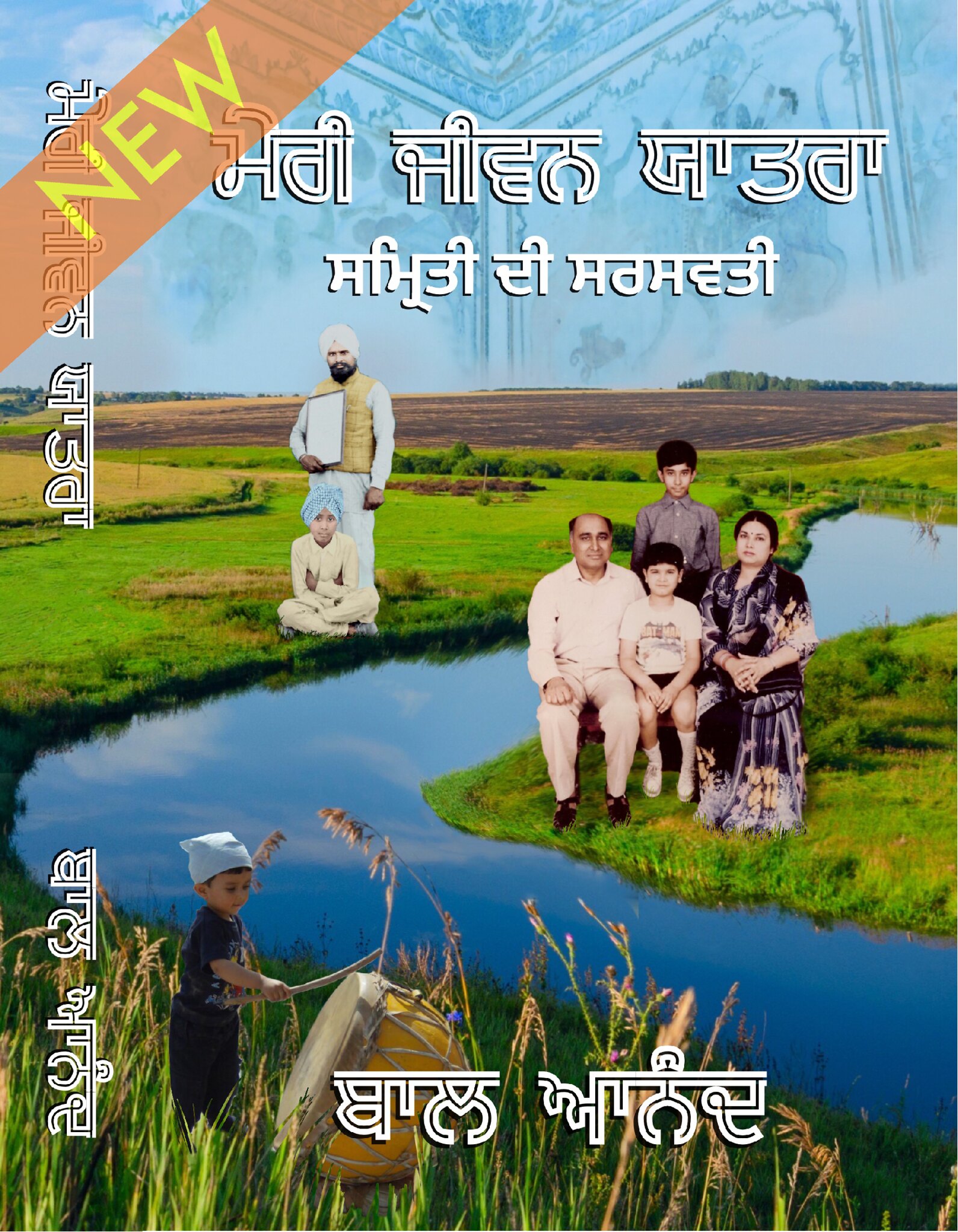
Bal AnandThe modern era of Independence in 1947 A.D. for this ancient land was heralded, most intriguingly, with the two "Untouchables" - the so called Hindu Shudras and the finest products of 'Firanghi' education ie Dr B.R. Ambedkar & Mr Joginder Nath Mandal, as the Law and Justice Ministers of India and Pakistan respectively. Ambedkar was instrumental in crafting the noblest document of governance of free India incorporating comprehensive legal provision to to root out the abominable caste based injustice to millions of Indians. Pakistan and later Bangladesh have followed different paths of their own in their governance and socio-economic development. The deeper civilizational wounds of Caste based discrimination have, however, continued to bleed across Indus, Ganges, Padma, Kaveri, Godavari and at the lofty heights of Himalayas. So when on September 16, during the session of the UN Human Rights Council in Geneva, Nepalese Foreign Minister Jeet Bahadur Gautam chose to break ranks with 'Hindu Consensus', saying that his country welcomed the idea mooted by the UNHRC document to involve, "regional and international mechanism, the UN and its organs" to complement national efforts to combat caste discrimination, the move by the UNHRC was denounced by the Hinduttva elements as, 'an irresponsible act of subverting Indian democratic and cultural institutions...smacks of Church influence to undermine India's Hindu heritage'! It was also interpreted as a blow to the official stand of India to block mention of caste in the category of, 'discrimination based on work and descent.'

Why has India been evasive and in a mode of denial on the issues of caste based discrimination being raised in the fora of the UN? The statement made by the Indian Delegate on August 8, 2002 in the "Informal Discussion on 'Descent' in the Committee on the Elimination of Racial Discrimination" is indeed perceptively revealing of a mind set. Referring to 'the situation faced by a particularly vulnerable section of our society', the Delegate hectors, "Our Constitution recognises both the fact of this discrimination and of the imperative of redressing the situation ... one of the first acts of the Government when India became independent was to outlaw this abhorrent practice (Untouchablity) ... ' The disappointment of those who wish that 'our laws are better implemented' is shared adding, 'Transforming a society that has evolved its customs and practices over millennia, and has been shaped in turn by those practices, takes time.' It is emphatically added that term 'descent' in Convention refers to 'racial descent' and that the Scheduled Castes and Scheduled Tribes are unique to Indian Society and its historical process - and do not fall under the purview of Article 1 of the International Convention on the Elimination of Racial Discrimination (ICERD).

The eminent Indian and Western Sociologists and the increasing tribe of scholar-activists of "Dalitology" have seriously engaged themselves in 'unraveling' the roots and branches of this most puzzlingly unjust practice of condemning such a large number of people to 'an enslavement of soul, mind and body' attributed to birth in certain social groups. The systematic effort by the British colonial administration at categorisation and ranking of the entire Hindu population within the theoretical Varna Scheme for the purpose of decennial census since 1901 spurred a scramble for the reclaiming of the Untouchable Castes through reform movements by Hinduism, Sikhism and Islam and conversions by resourceful Christian missionaries. The emergence of leaders of the caliber and vision of E.V.R. Naicker, Dr B.R. Ambedkar, J.N. Mandal, etc. from within the ranks of so called Lower Castes, not to speak of the far reaching Harijan agenda adopted by Gandhi Ji altered the entire spectrum of the 'Jaati Pratha' of Hinduism sustained since ages. Dr Ambedkar had to wage single handedly the grimmest struggle to be the greatest emancipator in human history, whatever the motivated Brahaman-scholars of the ilk of Arun Shourie might write masquerading as historians. Prime Minister Manmohan Singh has indeed been a man of honour and integrity to compare caste system to 'religiously' applied Apartheid.

Indians, beginning with Jawaharlal Nehru,have always had a fascination and magnetic attraction towards the UNO and other multilateral forums -the list of UN Pensioners bafflingly includes so many among the top who's who of the government of India. India's experience of J&K in the UN would, however, seem to have caused a deeper suspicion and a pathological allergy for any matter concerning itself to be raised in the UNO. Udit Raj of the Dalit based Justice Party has welcomed the UNHRC move stating that Indian Government should have courage to accept the reality of the problem and that global attention should lead to an increase in aid and government spending to improve opportunities for Dalits in India. The segregation of places of worship on the caste lines by the Indians settled abroad and the recent brutal murder of an 'Untouchable' 'Guru' Ramanand Dass in Vienna, the city of harmony in the heart of Europe, sadly reflect 'globalisation' of caste, calling for international efforts too to stem the tide of evil.

During the last two decades, the political fallout of the caste conundrum on the character of the much touted 'largest democracy' of the world, has been of nuclear proportions. The management of caste-divides with a just & fair deal for those who have been civilizationally demeaned and still remain woefully on the margins of 'shining India' has become the single greatest challenge for all those engaged in the realisation dream of an egalitarian and caste 'castrated' India. Ravi Dass, the celebrated medieval cobbler saint poet, has proclaimed:

Jaat paat ke pher Manh, urjh rahai sab log.
Manushta kun khaat huee, Ravi Dass jaat kar rog.
Jaat, jaat mein jaat hai, jiyon kelan ke paat.
Ravi Dass na manush jurh saken, jau tau jaat, naa jaat.
All are caught in the vice grip of castes.
Ravi Das, humanity has been finished, by the cancer of caste.
Caste, and caste within caste, like the barks of banana tree;
O Ravi Das,never would humanity be united, until the caste is cast out.

All those who love India to be united and strong would listen to what the saint poet proclaimed centuries ago!

[The writer is former diplomat]

Friday, October 16, 2009

Lala Har Dayal-an Enigma of a Revolutionary

The following article appeared in the online publication South Asia Post, Issue 97 Vol IV, October 15, 2009

I can vaguely recollect that name 'Har Dayal' had firstly got registered into the 'hard disc' of my memory when, soon after my joining the school in October 1948 I had started paying 'child-like' keener attention in 'overhearing' and somewhat incoherently 'co-relating' the conversations among the elderly of the family and their friends. I think that it was the reference to some 'supernatural gift of memory' - synonymous with intelligence and wisdom too - of an Indian 'who was got eliminated by the British out of fear of his 'divine' intellect!' The name of my father was also incidentally Har Dayal and he too was reputed to be a bit of an eccentric 'Vidwan', i.e. scholar, at a rather younger age, thanks to the strict discipline and dedication of Guru -grand father. This coincidence of a name inculcated a mysterious impression in my child mind that all intelligent and prescient persons, perhaps, posed some problems to the society and government! As education, modern as well the ancient has been mostly memory driven, the likes of Har Dayal - and my father - were rated to be the blessed ones.

It was in the winter in 1961 when I was a student of D.A.V. College, Jalandhar for my B.A. that I came to know about the 'real' Har Dayal. The college enormous reputation at that time for bagging top positions in the various examinations of Panjab University - the factor that made me cross over the Sutluj, to study at a distance of 80 km, without any adequate financial provsion my father could afford! I had taken up the newly introduced subjects of Sociology & Public Administration. A brand new lecturer who had just passed his M.A. in Political Science - standing Second (to the great dismay of college!) in the University was an amiable and friendly soul for a class of five - the select Panj Piare . The youthful Sikh professor, still more of a tudent and yet to cultivate the standard tricks of a seasoned - timber teacher, would try to inspire us to cultivate love of knowledge quoting from Lala Har Dayal's Hints For Self Culture. On my request, he was kind enough to provide me a copy of the book which I could read only in parts and found most of the contents rather complex!

It was in Bathinda in the summer of 1968, while teaching in a college that I could read Hints For Self Culture in its entirety. I could deeply appreciate the Olympian range and the vast perspectives of this spirited treatise of 'know all' - "to develop your personality as a free and cultured citizen". The author had invited, 'young men and women of all countries', in the preface datelined April 6934 A.H. - Anno Historiae -stating"...I may tentatively fix 5000 BC as the starting point of historical era...") ie 1934 A.D.,the year of publication of Hints For Self Culture by Watts and Company, London 'to follow the path of Rationalism' adding that if the book, "helps them in their efforts for self-improvement in the last degree, i shall be amply rewarded." I could note that the ideas of cosmopolitanism, humanism, rationalism and above all the scientific temperament were indeed the motivations behind Har Dayal's writing of this encyclopaedic Treatise. The book is available in paperback since late seventies and has run into several editions.

It was indeed a pleasant surprise for me to come across, on 2nd of September at an Open Book Stall during a Conference in Panjabi University, the edition in Punjabi, 'Swei-Vikas da Marg' translated by Prof. Achhru Singh, Nehru Memorial College, Mansa, Published by Lokgeet Prakashan, Sirhind. More surprising were the facts that the 1st edition had come out in 1991 and that the 4th edition of October 2000, 258 pages, was available at a resonable price of Rs. 100/-( P.B.) There was further a prominent report in the Punjabi Tribune on 13th September regarding the release at an impressive function at the Punjab Agricultural University , Ludhiana, attended by the Vice Chancellor & two former Vice Chancellors, of another translation in Punjabi of Hints for Self Culture. It is encouraging that the 75 year old seminal book on 'rationalism' and 'internationalism' should witness a fervour of interest in Punjab while the more open spiritual space so assiduously cultivated by Sufi Saints, Hindu Bhaktas and the Sikh Gurus has been continuously encroached upon by the practitioners of narrow sectarianism and religious hardliners!

As for my own further study of life and works of Lala Har Dayal, the book, 'Har Dayal, The Great revolutionary' by husband-wife, E. Jaiwant Paul & Shubh Paul (grand daughter of Har Dayal), Roli Books Pvt. Ltd., Delhi, 2003 was quite a revelation for me. The dazzling revolutionary and high priest of Ghadar Movement had taken a complete somersault in March 1919. In an open letter to a London journal, 'India', he publically avowed his conversion to, "the principle of imperial unity and progressive self-government ... within the Empire". This was followed by the more shocking booklet, 'Forty Four Months in Germany and Turkey', in which Har Dayal attacked the Germans as 'arrogant megalomaniacs ... unprincipled scoundrels' and praised 'British Character ... statesmanship ... historical mission in Asia'. The large circle of admirers of Har Dayal - 'a legend in India as an uncompromising revolutionary nationalist' - just could not believe all this. Frankly, I was not prepared to know from himl that, "The English are on the whole a truthful people ... England has a moral and historical mission in Asia ... British character and British statesmanship will preserve this structure for a long time ...". Har Dayal criticised the upper and middle class of India as, 'absolutely incapable and degenerate and unable to supply leadership.' There is no clear answer available to Har Dayal's strange change of mind except the conjectures of his concern for personal safety, failing health and the mention in a letter, 'I am despaired of the future of Indian nationalism; I want to work in other directions.'

I feel that life and times of Har Dayal need be understood in the more appropriate perspective. He was born on October 14, 1884 in the heart of old i.e. Mughal Delhi, near Chandni Chowk, next to what is still called Parathan Wali Gali. He was the sixth of the seven children of Gauri Dayal Mathur, a reader in the Delhi court & Bholi Rani. After schooling in Cambridge Mission School, he graduated from Saint Stephen college obtaining the second position in the Panjab University. He did M.A. in English from Government College, Lahore topping the University and followed it by doing M.A. in History. He was considered a rare phenomena for his extraordinary memory and excellence in scholarship. He was awarded state scholarship - Pound 200 per year for studying in England. As per practice at that time, he was married in 1901, while still a student, to Sundar Rani, daughter of Lala Gopal Chand,a wealthy Session judge in state of Patiala. Har Dayal left for England in 1905 to join Honours courses in Modern History in St John's College in Oxford. He impressed his teachers but also started visiting London to attend political meetings of Indian nationalists including Dadabhai Naoroji and Shyamji Krishna Varma, an associate of Bal Gangadhar Tilak. Meanwhile his wife had joined him and Har Dayal tried seriously but unsuccessfully to convert her into a political missionary. He became a close associate of Vir Savarkar & Shyamji.The 50th anniversary of 1857 was hailed by Savarkar as War of Independence and Har Dayal worked out a document , 'A Sketch of a Complete Political Movement for the Emanicipation of India'. Har Dayal resigned his state scholarship in mid 1907 and 'freed' himself by refunding voluntarily to the India Office 'the tainted money' - Rs. 485/- representing the amount the government had spent on on his passage to England! He gave up wearing English clothes and started moving about in Kurta and Dhoti, catching pneumonia and frequent bronchial disorders - "we are helpless before the fantastic obstinacy of Har Dayal", said Vir Savarkar. Har Dayal returned to India in January 1908 with the sick and pregnant wife by promptly encashing the single second class ticket sent by her father and instead buying two third class tickets!

During his seven months sojourn in India, Har Dayal met Bal Gangadhar Tilak who predicted that, 'he will soon develop into a major nationalist leader'. Based in Lahore, he tried 'to develop a broad base of political missionaries ... to carry on nationalist and revolutionary work'. He expressed disagreement with Lala Lajpat Rai over Arya Samaj stating that, 'our only religion is service of mankind ... either be a reformer or a revolutionary'. Though he never met - or even wrote about him - he was forerunner of Gandhi ji in stating, 'A nation ceases to maintain its entity and integrity if it begins to ape the manners ... of its masters ... the British educational system is one huge octopus which is sucking out the moral life blood of the nation'. It would appear that, 'in his quest for disassociation from the British, some of Har Dayal's actions bordered on the eccentric'. He had also turned anti-Christian and 'refused to see (Indian) people in European dress or communicate in the English language.' The British C.I.D. had put him & his group under strict Vigilance, particularly in the wake of killings by Khudi Ram Bose and P.C. Chaki in April 1908. Meanwhile, he was disowned by his father-in-law 'for destroying the life of his daughter' but remained closer to his brother Krishan Dayal. He was also in good relation with Dr Tara Chand (an eminent historian later), who was married to Sundar Rani's sister and acted as guardian of Sundar & daughter born on 8th of August. Though unwilling, Har Dayal had to leave India suddenly on 3rd August; slipping to Colombo, he managed to sail on an Italian ship to Naples.

Har Dayal reached Paris, where he met Bhikhaiji Cama; headed back to Oxford for over six months and was again in Paris to edit Bande Matramin in September 1909. He briefly went to Algeria and later moved to Martinique, a French island colony in the Caribbean. Bhai Parmanand, his old friend and fellow revolutionary from Lahore, went all the way to Martinique to meet Har Dayal.He could persuade him to go to Harvard University and make it centre for his work. Har Dayal reached the USA in early 1911, planning to study Buddhism at Harvard. Bhai Teja Singh, a prominent Sikh missionary, came down from California and was able to convince him that '... huge number of Indians needed leadership ... not only for social acceptance and economic equality in the U.S.A., but also as a force for India's national cause'. Har Dayal, however, headed for Hawaii to live an austere life of renunciation and 'preoccupation with Gautam Buddha and Karl Marx'. It was again Bhai Parmanand who reminded Har Dayal of the task awaiting him on the West Coast. The 'moody, needy and unfriendly Har Dayal', according to Emily Brown,the author of,' Har Dayal,A Hindu Revolutionary', found 'a compatible milieu in a university community in the United States ...' becoming friendly with with various celebrities lke Jack London, Irving Stone and Sanskritists like Dr Arthur W. Ryder.

Har Dayal, still just twenty eight year old, had a brief affair with a Swiss student and co-worker, Freida Hausworth but it was no diversion from the cause of 'Indian Nationalism'. The news of the bomb attack on the procession of Lord Hardine on December 23, 1912 made Har Dayal ecstatic and he wrote in Yugantar (New Era) calling bomb, 'Harbinger of hope and courage ... our resurrection ... triumphant cry of freedom on the Soil of Hindustan'. The founding of the Ghadar Party and the saga of Komagata Maru and Har Dayal's activities in the U.S.A. till July 1914 are well documented. After bitter experiences of 44months stay in Germany and Turkey during the war, he stayed in Sweden for nine years from October 1918. Based on an assurance by the Home Member that Har Dayal would not be prosecuted (for crimes on other soils), he, accompanied by the long live-in-companion Agda Erikson, arrived in London on October 10,1927. He steered clear of any political controversy and 'the man who had twenty years earlier spurned the state scholarship', studied for and obtained Doctor of Philosophy degree in 1930 for his thesis, The Bodhisattva Doctrine in Buddhist Sanskrit Literature.

Hints for Self Culture followed three yers later. Har Dayal's friends including Sir Tej Bahadur Sapru were still working hard for his safe return to India though Har Dayal himself had never requested for a trip to India. Finally, on October 25,1938, a letter was sent to Har Dayal granting permission to return to India. He and Agda were travelling to the U.S.A. for a series of Lectures by him and were scheduled to return in April 1939. Har Dayal died in sleep on March 4,1939, aged 55 years ... 'the evening before, he had ... concluded (his last lecture) with the words, 'I am at peace with my self ''.

For me, Jaiwant and Shubh Paul's book has long last put at rest many myths and doubts about the cult figure of Har Dayal. After my retirement, I had mentioned to my Professor of D.A.V. College days referred to earlier that time has indeed come to bring out an updated, New Hints For Self Culture. My class fellow of D.A.V. vintage and dedicated scholar of lives of revolutionaries of india, Prof Jagmohan Singh, enlightened me how Har Dayal had become a votary of 'Hindutava Nationalism' and a 'comrade in arms' of V.D. Savarkar. I also came across a lengthy quote of 1925 attributed to Har Dayal in B.R. Ambedkar's article on Pakistan declaring, "that the future of Hindu Race, of Hindustan and of the Panjab rests on four pillars: Hindu Sangathan; Hindu Raj; shuddhi of Muslims and conquest and shuddhi of Afghanistan and the Frontiers ... At present English officers are protecting the frontiers; but it cannot always be ...". Bhai Parmanand had talked much earlier of a separate area for all Muslims of India beyond river Sindh with Hindu population coming out from there! Why so much fuss over Jaswant Singh's book on Jinnah - the Question is much larger than lives of Gandhi, Patel, Nehru, Jinnah and Rajagopalachari or Ambedkar! The distinguished modern historian Shahid Amin calling Har Dial, "The Good Terrorist" asks: how do we reassess our "our good terrorists of the colonial period? He himself says that 'the power of successful nationalisms explains it all!

Let Har Dayal, once a volcano of ideas about future of India, rest in peace in the distant Swedish soil of Agda! My father Har Dayal, no lesser a proud scholar and tragic figure in his own right, had also successfully courted death at the age of 58: all human brilliance ultimately gets reckoned in the balance of Destiny !

Thursday, October 01, 2009

Revisiting school - Five decades later

The following article appeared in the online publication South Asia Post, Issue 95 Vol IV, September 15, 2009
 
The year 2009 has been curiously needling my mind about the days, months and years spent in my two schools. It was  full five decades ago that I passed my Matriculation Examination from Mahatma Gandhi Memorial National High School, Ahmedgarh, a grain market town situated about 20 km south of Ludhiana, Punjab. I have no hesitation in confessing that it was Master Ashni Kumar, my English & Social Studies teacher and Guru till he breathed his last in 1993, who made all the difference in life for me. I was back in my school on this 4th of September, to share the memories and impressions of my years in the same school with the present students. 
 
It is indeed so interesting to recall how an unusual happening had brought me to the attention of Ashni Kumar, a senior teacher, when I was a student of fifth class. Sohan Lal Joshi, a much younger teacher, considered bit of a maverick, had become a popular figure in our town by playing the role of Gandhi Ji in the drama staged in the school. He had awarded me 75 out of 75 in the paper of Geography in the December House Examination in 1953. This became a talk of the school because full marks were generally considered possible only in Mathematics.
 
Headmaster Hari Krishan Dutt, a staunch Gandhian and President of the Congress Party of Tehsil Malerkotla, had introduced the social service day on Saturdays for students from fifth to tenth classes along with their teachers. All used to work on a project of leveling and earth work of a 5 km stretch of a path to be linked to the main Ludhiana-Malerkotla road. It was during one of this work and fun session that my class-in-charge teacher Baldev Singh Maudgil asked Master Ashni Kumar if a student can be awarded full marks in subjects of social studies like Geography. Ashni Kumar unexpectedly asked, "But who is the student?" I was soon located and presented before this skeleton-thin bespectacled man who had a reputation in the area as a strict but most competent teacher of English & Social Studies. He asked my name and advised me to meet him later, when I would be in the sixth class, studying in the other building of the school used for higher classes.
 
As to the secret of my full score in the paper of Geography, I might explain that I had happened to read some parts of the text book of Geography belonging my uncle, a student of tenth class. The topics about the Himalayas, the ocean, sea ports, the land surface of India, forests, etc were the same as of my class. I had written my answers in greater detail than what teacher had dictated to us in the class notebooks! Ashni Kumar invited me to join the Literary Circle in the school, started by him. He guided and encouraged me to participate in the programmes of the school on Republic Day, Gandhi Jayanti, Children's Day, etc. In my eighth class, I was selected to participate in a debate in the school broadcast programme of the All India Radio, Jullundur. It was a uniquely joyful and significant experience for me. To my great surprise, I was paid Rupees 7 and 50 Paise by All India Radio for my two and a half minute participation! The amount was presented to me at school function on 14th November, 1957.
 
Ashni Kumar became my teacher of English & Social Studies for ninth & tenth classes. I was awarded Two Rupees by him for obtaining the highest marks in English in the very first test, the September Test, of ninth class. When he later asked me what did I do with the money, I told him that I had bought a book of general knowledge. He asked me to show it to him. It was a large and well bound - Gyan Sarovar (pool of knowledge) - brought out by Publication Division, Government of India. He glanced through the book, kept it, and at once gave me a note of Two Rupees saying, "You may buy another one", which I did. Later for many, many years, this book remained my favorite gift item for friends, with price continuing to soar as high as Rupees Fifty!
 
I remember how he had given special coaching to us - a group three select students - during one month of the long summer vacations. He taught us how to read 'The Tribune' newspaper; the word 'coup d'état' was added to our vocabulary on 15th July 1958 in the context of the bloody overthrow of monarchy in Iraq! He guided me, as a class monitor, to write a letter to the publisher, requesting supply of Test Papers by VPP - explaining what Value Payable Parcel implied! When in the tenth class I was selected to play for the District Cricket Team and was required to attend the ten day coaching camp, he arranged that I could appear in the December Test later at his home provided I did not 'see' the question papers - and I complied with his instruction!
 
My Matriculation Examination over in March 1959, he would call me to his home to recheck the totals, etc of the university papers of Geography that he was evaluating. He made me read a few of the best attempted papers asking if I had also written similar answers. Incidentally, I obtained 50 out of 60 in Geography, 83.3 % - quite okay by the standard of those days. Since I was never a top scorer in Math, my score of 660 marks (79.8%) was considered commendable. It required a lot of courage of conviction on my part to opt for pursuing the stream of Humanities in college. I think that Ashni Kumar, and also my father, approved knowing my over all interests - distant dream being woven around academics, and of course the Administrative Services.
 
It is interesting to recall that Arun Kumar of D.A.V. High School, Gurdaspur had topped the list of successful candidates with 751 marks out of a total of 850. Usha Anand of Alexandra High School, Amritsar had stood first among the girl candidates obtaining 724 marks. As per the result declared on Tuesday June 16 1959, the total number of candidates who appeared in the examination was 123,287, out of which 68,406 had passed. One would wonder where the two toppers are today. Kanwal Sibal and Ashok Bhan of the Punjab University Matriculation class of 1959 have respectively occupied the prestigious positions of the Foreign Secretary of India and Justice of the Supreme Court of India.
 
I should mention that I had started my schooling in September 1949 joining the District Board (soon named Goverment) Primary School in village Sohian situated in what was then still called Angrezi Ilaqa, a couple of kilometres from my native village falling in Riyasati Ilaqa of erstwhile state of Malerkotla. It was a two room kutcha-mud-structure with two teachers for the four classes, with about 60 students. At the time of my admission, the head teacher Pandit Lachhman Dass had asked my father, "Vaid Ji, do you want the boy to pursue higher education or you would prefer him to take up service sooner?" I recall distinctly that my father had politely replied, "We wish that he should go for as much higher studies as he can." The practical wisdom - or trick - perhaps, was that if someone was keen on seeking a job soon after Matriculation, his date of birth could be put in a year that would make him closer to eighteen years, the minimum age for entry into Government service!  In my case, I think that I have to be beholden to the wise head teacher of the village for bestowing an extra year of service at one of the highest levels of the Government of India!
 
I had joined M.G.M.N. High School, Ahmedgarh in May 1951 in the 3rd grade. The town seemed to me to be surcharged with an atmosphere of patriotic fervor in the wake of recently won freedom of India. The school was indeed the playground for local politicians and also the centre of cultural activities of the town. The Kavi Darbars by the local Sahit Sabha, Ram Lila, and regular discourses/Kirtans by visiting saints & Munis, etc was mostly held in the school ground. A number of new teachers were migrants from Pakistan and students found their accent of Punjabi quite alien and even funny; they would often imitate their styles. A young socialist leader, Tek Chand Diwana, had used the Gandhian weapon of fast unto death in October 1955 over his demand that the committee for managing the school should be democratically elected. The Deputy Commissioner of Sangrur, Satya Dev Bhambri - slim and in simple dress - resolved the problem by conceding the demand and offered a glass of juice to the fasting Gandhian! My father, pointing towards him, had told me that he had qualified the examination of Independent India's new top service called IAS and that his father was a small-time shopkeeper!!

When I look back in 'Wordsworthian' tranquility and reflect over memories of my magical school times, millions of, 'diyas' - tiny earthen lamps - get lit up… The morning of my IAS, etc result … my name among the successful candidates … I come home and touch the feet of my father who says, "Bal, please do go to Master Ashni Kumar Ji, before you get busy." I reply, "I have already visited Master Ji before coming home to you."… "Well done, my boy … when a tree grows taller and bigger, many would come to rest under its shade and many would appreciate its fruit … but the tree must remember the gardener who nursed and looked after it when it was a tiny plant!"
                  

Thursday, September 03, 2009

Meeting with Justice A.D. Koshal

Meeting and discussions with Justice A.D. Koshal. Sharing of memories and histories - personal and regional. Took place in Ludhiana, Punjab, India on 3rd September 2009, Thursday.

The following playlist will play 5 videos in sequence, total of 51 minutes.


Further Links:


Monday, August 31, 2009

Folk fair: Mela of Chhapaar, Mythology & Memories

The following article appeared in the online publication South Asia Post, Issue 94 Vol IV, August 31, 2009
This was also published in the monthly publication Identity, September 2012

THE civilization of India has been characterised by a uniquely vigorous and ingenious celebration of human life in complete compatibility with all the attendant elements of nature, more particularly the cycle of seasons with the most merciful 'Monsoon Rains' in the prominent focus. The ancient traditions of religious and spiritual domain; long linkages of mysteries of history and mythology; conflicts and co-operation of divides communities; process of continuity and renewal in the realm of folk music & dance; popular entertainments and pastimes in their ever transforming modes including technological developments; the folk fast foods; apparels proclaiming people and commercial wares in their infinite varieties - folk fairs & festivals of India have always encapsulated them all! If the fair of Pushkar attracts people in hundreds of thousands in a rainbow extravaganza amidst the grandeur of beauty of a vast desert, the 12 yearly Maha Kumbh at the civilizational confluence of the trio of sacred rivers has the distinction of being the largest congregation of people for a festival on the planet!

The legendary Panjab, the shield & sword of the ancient land of Bharat and the granary of modern Republic of India, has a proud and rich heritage of fairs & festivals. According to official records, the pre-partition Panjab boasted more than 7,000 fairs; the number was counted 4561 in 1961 for the Indian Panjab. The truncated present Panjab has been left with 2,027 popular fairs. District of Hoshiarpur has the largest - 311 folk fairs followed by Sangrur & Ludhiana, with 136 & 135 fairs respectively. The encouraging trend is that more fairs are getting institutionalised commemorating local heroes and cultural aspects including sports festivals. The generous patronage of rich and famous Panjabis living beyond the seven seas from the soil of Panjab has been imparting a new vitality to the culture of folk fairs. It is also a healthy situation that 750 fairs are held in the rural areas of the state.


Fresco at the Googa Shrine, Chhapar

Mela of Chhapaar, associated with ancient tradition of 'Naag Poojan' i.e. the worship of the deity of Snakes, could be linked to Hindu mythological belief that planet earth is supported by millions of hoods of 'Shesh Naag' - the gigantic snake - whose soft curvaceous body also forms the resting spread of Lord Vishnu, the Lord of Preservation of the entire support system of life in the universe. The process of ploughing, sowing, watering and finally harvesting of crops have all been preceded by 'Naag Poojan' in some form according to ancient traditions of all faiths of India's heritage. The ritual worship of 'Googa Pir' - symbolising human dimension of snake - seems to have developed in North India as a secular tradition in the medieval times. So many intricate tales have got woven around the persona of 'Man-Snake-King' that sifting of reality from myth has been rendered impossible. Interestingly, folk lore even links the place of the fair to the Mahabharat era, being Capital of a powerful Queen, namely Chhapa. Kaul Basanti, the fiance of Arjuna's brave son Abhimanyu, is mentioned to belong to this place. The river Sutluj, it is pointed out, was flowing quite near by in those times. The ancient name of Chhapaar is also mentioned as 'Damrhi Shehar'.

The verifiable references about the Chhapaar Fair indicate that it was in 1833 A.D. that devotees of Googa Pir brought the soil & bricks from the ancient Googa temple in Dadrewa, near Bikaner to construct the present shrine. As the time rolled on, the sand dunes around the shrine were levelled to be brought under plough. The founding of new town of Mandi Ahmedgarh in 1903 at a distance of less than 4 k.m. to be followed by Rail link next year between Ludhiana-Dhuri-Jakhal opened up a whole new world in the region. There is also a reference that in 1914 Maharaja Jaswant Singh of Nabha provided funds for construction pukka shrine and also donated 25 bighas of land to it. The Mahavir Dal has done a lot in recent years to develop the area around the shrine. The two grand statues, one of Googa Pir mounted on his legendary horse and another of Lord Shiva, in his full regalia, riding Nandi Bull have been installed. The devotees offer prayer by splitting soil seven times in a dug up semi circle area in front of 'Marhi' i.e. shrine invoking protection against snake bite. The offerings inside the shrine consist of puffed rice, sugar balls-Patashas-Gur cakes, grains, cash, etc. According to the 1889 District Gazetteer of Ludhiana, more than 50,000 people of all faiths enthusiastically attended the fair - consider,that population of Ludhiana at that time was just 44 thousand (present 35 Lakhs), Malaudh 2889, Kaunke 3,608 & Bassian 2,9621!

I was luckier to experience directly the gusto, colorfulness and pulsating character of the Chhapaar fair when my family shifted residence to Ahmedgarh from our neighbouring village and I was put in the school there in 3rd grade in May 1951. For the next 20 years till 1970, I was a keen witness to the fun fare & splendid spectacles of this land mark fair. The passage of time with attendant socio-economic changes has been transforming the nature of the fair too. The traditional folk singers, rhymesters, minstrels of heroic ballads, artists of 'jinda'-live- dance; jokers, tricksters, tattooists - all have been plying their trades in the best traditions of their skills. The make shift shops selling amazing variety of wares; mechanical swings; Circuses (Gemini & Romon come to mind) with lions, elephants, horses, bears, male/female gymnasts; wells of Death; tented cinemas - all that presented, as if, a mix of Disney Land and Fairy Land - the on-off illuminations were indeed an other-worldly sight for people before introduction of electricity in 1956! My first film 'Koday Shah', shown by my father in company of his friends when I was in 6th grade, still remains my most favorite for delightful comedy in Panjabi and haunting songs. The lyric, 'Jagg wala Mela yaro, thori der da/ hansdia raat langhe, pata nee saver da!' - Fun-fare of the world is too short/ A night full of laughter; morning, we might cease to be! - sung in the soul-ful voice of Mohammad Rafi filled the atmosphere with message of an eternal truth by Sufi saints!!

After Independence, the conferences at the Fair by the political parties have become an interesting integral dimension of the fair. The Congress & Panthic Parties have been vying with each other in putting up larger Shamianas & ensuring that top leaders do come to address this popular open forum of people. It was, however, the make-shift stage of the Communist Party (when it was united) under the starry and moonlit sky that used to exercise a magical magnetic pull for the people. The gifted and dedicated group of Party's artist-activists including Joginder Bahrla, Balbir 'Mast', Narinder Dosanjh and many more inspired a generation of masses of Malwa region to adopt progressive ideals. When CM Captain Amarinder Singh failed to attend the Fair twice, in 2005 & 2006, while P.S. Badal was thundering there, the verdict of elections of Feb 2007, according to Fair loving Panjabis, had become a forgone conclusion!

It was on 21st October 1997 that as Indian Ambassador to far off Panama - the bridge land between the two mighty oceans - I persuaded visiting eminent thinker-dancer Sonal Man Singh to go to the annual folk fair at the church of Black Christ in Portobello, an ancient port city in mid-Caribbean. The fair, representing African connection of Christianity, simply overwhelmed Sonal who said, "It was such an impressive spectacle of devotees, dressed in purple and maroon colors, dancing all the way...that my Krishan Kannahiya would appear in this way before my eyes, I had never imagined this to happen in Panama!" Perhaps, similar mystical experiences are blessings of those who, purged of all pride & ego, mingle themselves among the multitudes of people brought together by feelings of love and friendship, in Mela Chhapaar or in any other similar folk fair!

Saturday, August 15, 2009

India's Muslim Question

The following article appeared in the online publication South Asia Post, Issue 93 Vol IV, August 15, 2009

MY search for answers & explanations to, 'India's Muslim Questions' had, as if, begun very early in life. I can recall, with all the profound innocence of a four years old, the strange atmosphere of the summer of 1947. The red covered 'Vahi', also called 'Chaupatta', i.e. the double-folded long-paper-sheets, family-record-book, confirms, "July 26: Rs 7/- spent on the materials for 'Amrit-paan', i.e. the Sikh Baptism ceremony". The partaker was my father who had added, 'Singh' to the given family name and also started sporting the Sikh 'Kachhehra', i.e. long pair of breeches extending up to knees instead of Dhoti. He also gave up sharing the 'Hookah', i.e. the traditional 'hubble bubble' with his grandfather. He was exactly 27 year old at that time, well read and well travelled, his spiritual journey from from a 'Sahajdhari' to 'Amritdhari', I may now say, reflected the spirit - 'Garam Hawa' - of the fast changing Time! The 'Vahi' has also on record that my great grandfather, a renowned physician-scholar and Guru of my father, passed away on 19th October - a day after the death of long ruling popular Nawab Ahmed Ali of Maler Kotla, the only Muslim state in the east of Sutluj.

It was on 29th October 1947, at the Bhog Ceremony, i.e. the last prayer for my departed great-grandfather after the complete recital of the Sikh scripture, Shri Guru Granth Sahib, that I overheard - and half understood - Pandit Barkha Ram, a learned Brahmin and close friend of the departed, saying "Ghor Kali Yug -the worst of the epochal ages - has indeed arrived; the noble people can no longer endure witnessing the brutal killings and the grossest injustice being heaped on humanity...". The first 100 days of the long awaited freedom of ancient Hindustan and birth of a brand new nation, Pakistan - the land of the Pure - had indeed witnessed the worst kind of violence against innocent people, in the name of religions!

The emergence of Pakistan had been considered an inevitable historical and political necessity by the retreating British empire; hailed as the ultimate solution to the Muslim 'Question/Problem' of Hindustan by the separatist Muslim League led by a determined lawyer, Muhammad Ali Jinnah and an avoidable most tragic blunder by Maulana Abul Kalam Azad & the Indian National Congress. The unprecedented situation was seen by many as the culmination of a process of churning, for centuries, of the waters of the civilization of the great Indo-Gangetic plains - containing both the Amrit, the heavenly liquid & also the worst poison. The Shiva like figure, Mahatma Gandhi, who could have swallowed the 'poison of raging communal hatred' was soon eliminated from the scene by elements interested in only the relentless pursuit of Power.

The majority of my school teachers were 'the refugees' from the other side of the Radcliffe Line. One of them, the erudite Ashni Kumar, remained my, 'friend, philosopher, guide & Guru Extraordinaire' till he breathed his last in 1991. He belonged to the town of Gujarat, the home of legendary folk heroine, Sohni. He had studied in Lahore in the early thirties and used to tell me proudly that he was taught English by Prof. Madan Gopal Singh who was killed in the communal riots (like another brilliant Prof. Brij Narain of Economics) and great Sanskrit scholar Dr. Raghuvira who had later become President of then Bhartiya Jan Sangh. We exchanged regular correspondence often dealing at length on issues relating to religion, politics education, literature, particularly in Urdu, Hindi, Punjabi etc. He was, with his clearly progressive leanings, always so eloquent on themes of communal harmony referring to the deepest reservoirs of goodwill in all religious texts-and the ghashtly gaps in practice by the followers! When I had joined the college in Maler Kotla, he would ask me about the atmosphere of studies and the attitudes of Muslim Students. He would tell me that majority of his friends in college in Lahore were Muslims who used to tease him saying 'the real communalist is your Gandhi who is always indulging in strange religious practices in public; our Jinnah never goes to any mosque, nor does he observe any other Islamic rituals ... loves 'good' things of life!'. They would add that Jinnah mostly talked of the economic backwardness of Muslims and their lesser than legitimate share in the structure & system of the prevailing, and would be, governance of the nation.

It was in the above background that the title, 'Muslims in Indian Economy' First Edition, September 2006, caught my attention at the book sale counter on 1st January 2009 at the annual day long cultural congregation organised in memory of playwright political activist Safdar Hashmi 'martyred by hooligans of Congress Party in 1989'. The book has been published by Three Essays Collective in its series focusing on 'issues of contemporary concern ... to familiarise readers with current debates ... '. The reference to the similar questions above by my school teacher - debated during the decade following the adoption of the Resolution of 'Sampooran Swaraj' i.e. Complete Independence on 26th January 1929 and preceding 'The Resolution of Pakistan' on 21st March 1940 in the same city on the Banks of river Ravi. This comparatively slimmer paperback - 240 pages, Rs 275 (India) elsewhere $15 - volume by Omar Khalidi, 'an independent scholar and a staff member at the Massachusetts Institute of Technology' poses all the relevant questions in the Introduction of the book, "What is the economic condition of the Indian Muslims at the dawn of the twenty first century? ... How does the economic profile of the Muslims compare with the majority Hindus, Dalits, and minorities like Christians, Sikhs & Parsis? ... Does Islam, or Islam as interpreted or lived, have anything to do with it? ... What is the record of the post-independence central and state governments? ...". Prof. Khalidi rightly points out that 'answers to these questions require a dispassionate reading of contemporary history ... it is also necessary for the appropriate corrective measure that need to be taken, both by the community leadership and by the state'.

The writer refers in the Preface and Acknowledgement that the Indian Muslim Council USA has funded the research for this book. The readership targeted - 'audiences' according to him - is "India's movers & shakers: legislators, administrators, politicians, leaders in business & industry, and the like". The theme of the book, stated in the introduction by the author, demanded treatment in manageable components in terms of regions or sectors of 'the 130 million Muslims in India ... the second largest Muslim population in the world'. The chapter titled 'Medieval and Colonial India' hurriedly traces the contours of the Muslim society as it evolved c.1200-1800 with three broad categories: the aristocracy and nobility, both secular & religious, the artisans and the cultivators. The Muslim peasants and cultivators, like their counterparts in other religions, remained economically active in agricultural production, fishing, herding and other manual work. Independent professionals among Muslims were few, except the traditional doctors or Hakims. The pattern of Muslim economic life did not change radically during the Mughal period of northern India (1520s-1720s) .The steady growth of the authority of East India company eroded the position of Muslims in law courts and in 1835, the introduction of English as the language for official governmental and legal business further marginalised the Muslims. The disaster, according to author, was "the Mutiny of 1857, which though commenced on caste grounds by Hindus, was blamed on the Muslim community as an anti-British revolt".

The Muslim exclusion from from the British dispensations took time to be rectified and the process was greatly facilitated by Sayyid Ahmed Khan of Delhi & Aligarh and Qazi Shahabuddin of Bombay. The book is replete with figures from the Colonial records to highlight how Muslims had regained their share in the rank and file of bureaucracy when the movement for Independence from the British rule under Mahatama gained full momentum. The Chapters titled, Independent India; Delhi., Uttar Pradesh (78-120), Bihar, Deccan & Andhra Pradesh (139-177), Karnataka, Maharashtra provide richly analytical information on the profiles of the Muslim communities in these regions. The Indian Muslims - in practice, the educated - had the option of migration to Pakistan till 1971. The opportunities in the oil rich Gulf countries during the last three decades have played a significant role in the evolution of the community. The ever strained Indo-Pak relations have continued to cast shadow on the morale and psyche of the community.

In Summary and Conclusions, the author has referred to the progress of the community in the southern states and how lack of education and training in professional fields has continued to negatively impact the Muslims of India. The author has tried to steer clear of politico-religious controversies stating, "the improvement of (Indian) Muslims' economic condition can only be a part of the general programme of poverty alleviation of all (the people of India)".

Syed Shahabuddin, formerly of Indian Foreign Service, an ex-MP & Editor 'Muslim India' observes in Editorial of June, "in 2004, 38 Muslims were elected to Lok Sabha; in 2009 the number has gone down to 30 ... on the basis 2001 census Muslim representation should be 72 ... in the 15th Lok Sabha, the Muslims will largely be voiceless: questions will not be asked...". We may, however, like to listen more attentively to Today's Akbar (M.J.), "Pakistan was only ever a very partial answer to what the British called the 'Muslim Question' ... they (Indian Muslims) are convinced now that 1947 was a mirage; but there is too much fog between them and the next horizon ... Economics has flattened the world into a race track, and not every community is in the race ..."

The most crucial question is: should only the Indian Muslims be feeling concerned over the issues pertaining to them? Should not the Indian Muslims also be deeply involved in the matters pertaining to the Majority Hindus & other minorities in the secular Republic of India and vice versa? I would strongly recommend Omar Khalidi's book to all who think themselves that they are 'Indians First' and also to those who prefer to prefix their religious identity to being Indian.