Showing posts with label poetry. Show all posts

Saturday, June 06, 2020

Guru Nanak's 550th Anniversary - International Conference in Chandigarh

Dear and Esteemed Colleagues,

I presume that you might be interested in the evolving contours in the recent years of Sikhism in its scholastic, spiritual, political and cross cultural dimensions. The subject has indeed assumed significant diplomatic-strategic aspects also of the 'Pilgrimacy' and role of radical elements of the Sikh Diaspora in the context of the global celebration of 550th birth anniversary of Guru Nanak (April 15, 1469 - September 22, 1539) and more particularly of Pakistan's quite unexpected coming forward for the implement - at a lightning speed indeed - of the long cherished 'Sikh psychic dream' of the 'Kartarpur Corridor'.

An institution, named interestingly, 'Centre for Research in Rural & Industrial Development (CRRID)', in Chandigarh, proclaiming its founding to Sh P.N. Haksar's inspiring motto 'ceaseless striving in search of Truth through research' hosted, co-sponsored by Govt. of Punjab and Indian Council of Social Science Research (ICSSR), an 'International Conference on Guru Nanak's Philosophy...' on 7-8 Nov 2019.

I had the pleasure to participate in this conference of eight sessions - with as many as 32 scholars / academicians making their presentations on various subjects related to the Vaani / teachings of Nanak - of the Seminar apart from the inaugural session with keynote address by Prof Murli Manohar Joshi & Presidential remarks by Sh M. Hamid Ansari. The valedictory session was addressed by Dr Manmohan Singh.

The deprivation of 'Khulle Deedaar - Unrestricted Access' to the Sikh Shrines in Pakistan has been the most agonisingly experienced psycho-spiritual wound among the faithful of the dynamic community. The matter has got incorporated in the regular Ardaas - Prayer after every formal religious function. The words are reproduced below:

ਸ੍ਰੀ ਨਨਕਾਣਾ ਸਾਹਿਬ ਤੇ ਹੋਰ ਗੁਰਦੁਆਰਿਆਂ, ਗੁਰਧਾਮਾਂ ਦੇ ਜਿਨ੍ਹਾਂ ਤੋਂ ਪੰਥ ਨੂੰ ਵਿਛੋੜਿਆ ਗਿਆ ਹੈ,
Sree Nankaanaa Sahib tae hor Gurdvaareaan’, Gur'dhaamaan’ dae jinhaan’ thon’ Panth noon’ vichhor-eaa geaa haee
ਖੁਲ੍ਹੇ ਦਰਸ਼ਨ ਦੀਦਾਰ ਤੇ ਸੇਵਾ ਸੰਭਾਲ ਦਾ ਦਾਨ, ਖ਼ਾਲਸਾ ਜੀ ਨੂੰ ਬਖ਼ਸ਼ੋ ॥
Khullhae darshan dee-daara tae sevaa san-mbhaal daa daan Khaalsa jee noon’ bakhsho.

I am taking the liberty of presenting - below - the Paper, running into about 2750 words, presented by me titled, 'Guru Nanak - Poet and prophet of Oppressed and Persecuted'. I was tempted to quote a few parts of it in this covering note - but was dissuaded by the feeling not to make it any longer - and leaving it to you to have a quick look at it - as and when you feel inclined.

Guru Nanak - Poet and Prophet of Oppressed and Persecuted

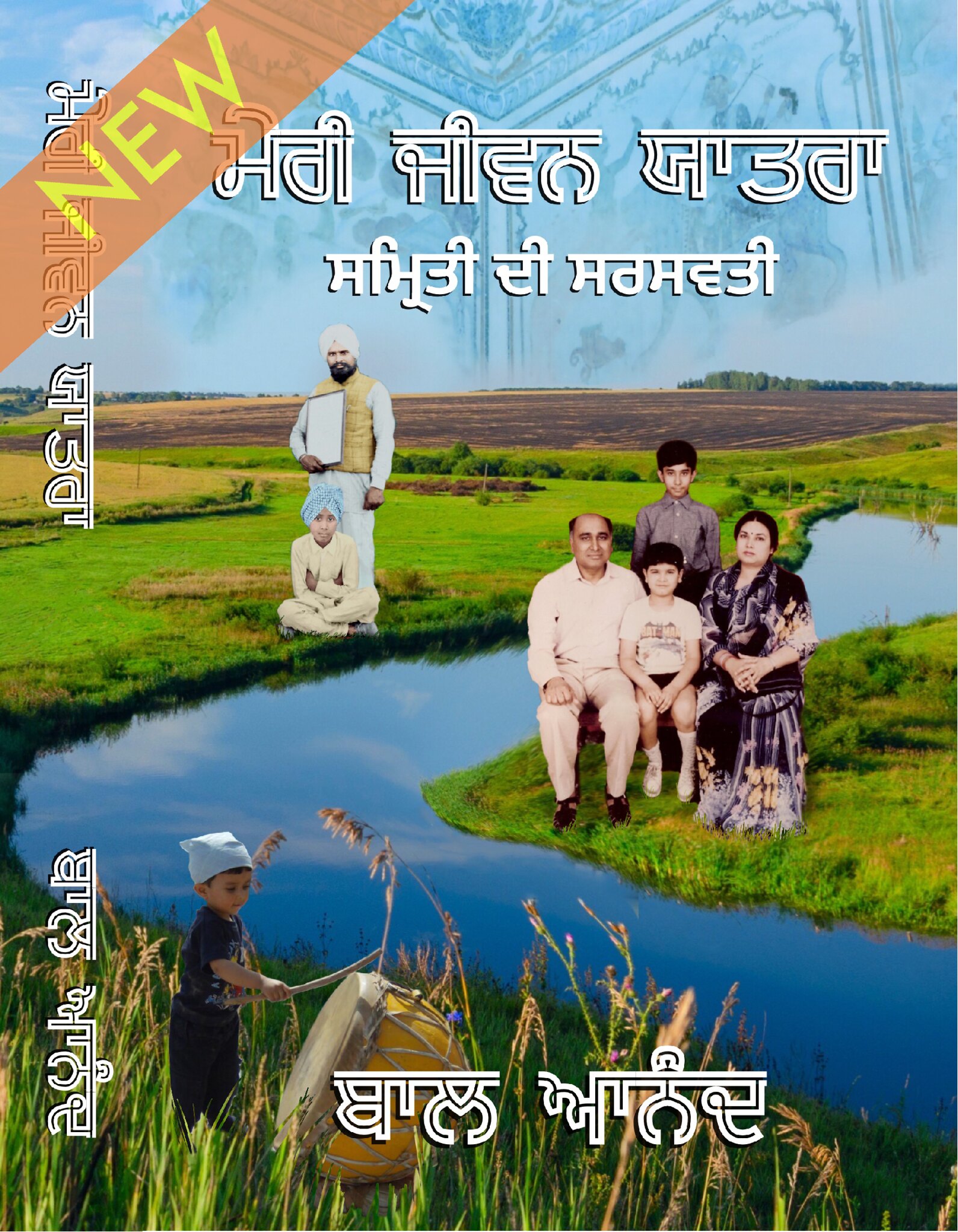
Bal Anand, Indian Foreign Service (Retired)

All those who have lived through the last five centuries in the mystically blessed and also terribly tormented ancient lands of five rivers, and areas lying beyond the adjoining north-western regions of Bharat i.e. India, have indeed been spiritually solaced and sustained by the resplendent eternal presence of Baba Guru Nanak Dev Ji (April 15, 1469 - Sept. 22, 1539 A.D.). During all these years of trials and tribulations wrought upon the people of these lands by their own innate flaws of character or inflicted upon them by the unjust rulers and rampant invaders, ‘the dhuur ki Baani-the deepest Divine discourse’ of the Guru conveyed in the soul stirring sublime poetry, in their own genuine tongue, has been burning bright for all to enlighten their lives.

2. When the toiling and harmony loving people of Guru Nanak’s beloved Punjab were brutally cut apart, amidst rivers of blood and tears - four centuries after his lifelong mission of healing the wounds of religious and social divides with Divine notes of harmony in knitting humanity together-I too had experienced shivers into morrow of my bones as an innocent child of four years, awkwardly awakening to the cruelest ways of the world, by the soul piercing song in my ‘maan-boli’, which seemed, as if, to convey it all to me, “Nanakaane vall nuun jaandia raahiaa ve, meire Pritam nuun sandesha devin jaa… O dear traveler, journeying towards Nankaana, please do convey the deepest cry of my soul to my beloved Guru…” I need not delve into details of those days of the most barbaric mass murders in history of humanity to which people of Punjab had been subjected when India was proclaimed to have awakened to the long awaited dawn of Independence.

3. While speaking to you all at this moment, ladies and gentlemen, in the city beautiful, I indeed feel acutely conscious about my own odd journey of life spanning seven decades and a half, my obvious limitations to fully fathom and understand the most pious life of the great Guru. In his relentless and epochal search until his last for the ultimate truth and an eternal moral order, more pin pointedly during the last five decades since the world had celebrated the quincentenary of the self-proclaimed ‘Saier- songster (of Supreme Creator) and ‘Neechan andar neech-the lowliest among the lowliest’, one of the most extraordinary poet-prophet of humanity has ever known..

4. Dear Friends, please permit me to start with certain basic facts to elucidate my topic of the day. Firstly, we have to begin with an honest admission that ‘no manuscript in Guru Nanak’s own hand has survived the onslaught of time’. Prof. Pritam Singh, the painstaking scholar of manuscripts, has underlined at length how the pervasive practice of writing anything in Gurmukhi or Devanagri scripts ‘without separating different syntactical units from each other’ has posed a formidable challenge and that ‘readers needed a long period of training to read such text correctly…’ Guru Nanak had, however, most thoughtfully entrusted to his toughest tested successor, Bhai Lehna elevated to be Guru Angad, the manuscripts of his own compositions and also the writings of other likeminded saint poets collated so diligently by him during his wide spread travels and intimate discussions with several of them. A total of 974 hymns - in 19 major ragas i.e. melodies of Indian classical music - attributed to Guru Nanak had been later incorporated in Sri Guru Granth Sahib (SGGS) by Guru Arjan Dev Ji, when he compiled the Granth, sixty five years later. A majority of Guru Nanak’s verse creations are in the form of quatrains and in other popular verse forms -  ‘the themes are ethical, philosophical, or devotional and in their totality make up the cosmic vision.’

5. Guru Nanak’s composition titled Japji - the Holy chant - comprising of 38 Pauris, literally 'ladders', implying poetic stanzas, has been rightly adopted as the prayer for recitation at early dawn, known in the Sikh tradition as ‘Amrit Vela-the ambrosial hour’. Japji, opening with invocation to God, has amplified the concept of Supreme Being, with a statement on the nature of God: His uniqueness, Omnipotence, Immortality, etc. and reaffirms His being both Truth and Reality. It concludes with an assertion that knowledge of God is obtained through the grace of the Guru - an enlightened individual. The prominence of this composition has been ‘recognized as such by the Fifth guru, Arjun, when he gave it the first place in the sacred anthology.’ In essence, it is a monotheistic concept of Supreme Being, known in Sikh tradition as, ‘Ek Oankar - One Sole Supreme Being’. Another composition of Guru Nanak for morning recitation is Asa Ki Var, ‘a disquisitional poem of 24 stanzas, interspersed with Slokas (groups of poetic couplets); it denounces falsehood and hypocrisy in the practice of religion in society.’ The Var Majh; in Raga Ram Kali Dakhani Onkar; Solahe (sixteen-stanza poem) in Maru Rag and Sidha-Ghoshti, again in Rag Ram Kali, Guru Nanak expresses his broader thinking over philosophical and ethical issues and points out that meditation - Naam Simran is indeed the true Yoga. The primary purpose of all these verses has been to free the minds of the ordinary people from all types of superstitions and negative social practices.

6. When we turn to the group of four poems, in Raga Asa and Telang, ‘expressing strong indignation of Guru Nanak over the barbarities perpetrated by the invading armies of Babur over the people of Punjab including large scale dishonour of the women-folk’, we come across a rare example of a man of prayer and meditation demonstrating a supreme courage of convictions in denouncing the tyrannical deeds of the ‘the Paap ki janj – marriage party - mafia of sinners coming from Kabul’. The death and destruction during the sack of Lahore for four days in the middle of January 1524 finds mention in the boastful narration in ‘Babur-nama’ by emperor Akbar’s grandfather and the forceful challenging counter narrative in the poems ’Babar-vani’ by Guru Nanak- “Bavarvani phir gayi… Babar’s sway has spread all around; even princes are roaming without food…” The painful plight of people is poignantly pictured by Nanak in another hymn: “O our Lord, our Creator, when there is such killing, such suffering, such pain, so much spilling of blood, so much shrieking, do You not feel pity for the poor!” Guru Nanak’s had felt deeply outraged with the indignities and cruelties piled upon helpless women and expressed their plight with the most graphic poetic images: “Jini siri sohani pattian, mangi paae sandhur - Women whose heads were adorned with tresses; Parting of whose hair was daubed with vermilion; Their locks are shorn with shears, their throats choked with dust… Thou art the Author of all things; Thou seest all. Strange are Thy manifestations!”

7. Guru Nanak - the indefatigable seeker of Mukti - the Salvation of the soul via the pursuit in practice of an honest living following the path of Truth and Nobility - was passionately committed to justice, equality, fraternity and fair play for all. He castigated the rich and powerful for their greed and lust and indulging in atrocities against the poor - he chose to be counted with the clans and classes of Bhai Laalo, the hardworking carpenter friend and Bhai Mardana, a soul mate lifelong musician companion, who was also dubbed to be of low caste even among followers of much acclaimed equalitarian faith of Islam. Here Guru Nanak consciously moved beyond limitations of Bhakti movement and its attendant divide of Nirgun and Sargun i.e. Formless and Formal. He equivocally challenged the hypocritical orders of the day - the caste and rituals ridden Hinduism and unjust and intolerant practices of comparatively recently arrived Islam. Guru Nanak indeed echoed Kabir, “Tu kehta kagad ki lekhi; mein kehta aakhan ki dekhi - you speak of what is written on the paper; I speak of what I have seen with my eyes,” by proclaiming, “Jiho dittha, tiho kiha - I said what I saw.” The inspiration and courage of conviction for Guru Arjan for the inclusion of the verses of the several low caste saints - Kabir, Ravidas, Nama, Sadhna, Sain, etc. - in the Granth Sahib had certainly its sacred fountain source in the integrating spiritual ground so assiduously prepared by Guru Nanak.

8. We have to understand how Guru Nanak had adopted systematic strategy to diagnose the crises of institutions of the contemporary society. He noted quite clearly how the native Hindus had become deeply demoralized and confused and were leading contradictory lives, “Antar Pooja parhi kiteba sanjum Turka Bhai… - inside home you worship (as Hindu), but outside you read other books to impress the Turks; Discard this hypocrisy! Devotion to Name will ensure liberation.” Though the ‘Nirguna’ saint poets had not hesitated to employ blatantly strong expressions to condemn caste distinctions, Nanak, in a rare poetic restraint, preferred to use touching poetic twists to ceremonial practices like the wearing of ‘janeoo - sacred thread’ saying, “Daya Kapah, santokh soot… Out of the cotton of compassion / Spin the thread of tranquility / Let continence be the knot / And virtue the twist there on. O Pandit…” Similarly, Guru Nanak sought to chastise the Muslims to follow their religion as enunciated by their saintly guides and not the sinful rulers,” Musalman kahanu muskilja hoe ta Mussalman kahave / Awwal Aaoli din kar mittha musklmana mal musaave… To be a Mussalman is not easy: only he who is one in reality, should make the claim. Follow first in the footsteps of the saintly; accept their bitter words as sweet… O Nanak, if he extends his mercy to all; treats all living beings as the same - himself a Mussalman he can proclaim.”

9. The most refreshing and relevant notes for his troubled times struck by Guru Nanak pertain to defending the dignity of the womenfolk and underlining biological and societal crucial role of women in the overall scheme of Nature. He condemned extolling of the orthodox Hindu cults of celibacy and renunciation and sought to elevate ‘Grahisatha-life of a householder’ as the noblest obligation ordained by ‘Srijanhar-Supreme Creator’ of the Universe. He was strongly critical of perverted notions among Muslims of treating women as slaves for indulging in animal lust. He emphasized that husband and wife are indeed created equal and that fidelity was enjoined on both. Guru Nanak pictured domestic bliss as a cherished ideal of life and marriage as the metaphor for consummation of love for the Divine. In the Asa ki Var, Nanak rejects the superstition of Sutak - implying that a woman giving birth to child is unclean and impure for a number of days - depending on the caste to which she belongs! In his masterly composition, Nanak says, “Impurity of the mind is greed and the impurity of the tongue is falsehood. The impurity of the eyes is to gaze upon the beauty of another man’s wife and his wealth. The impurity of the ears is to listen to the slander of others…” Nanak proclaims the eternal truth saying, “Within a woman, a man is conceived; to a woman he is engaged and married… through a woman, his future generations come… So why call her bad? From her, Kings are born.” Guru Nanak had condemned the ‘Sati-pratha - wife burning herself on pyre of dead husband’ - he says that it is nobler to live with pious memory of the departed loved one than embracing an unnatural quicker death.

10. Most esteemed friends, in the pointed context of Bharat, we must finally reckon all the reformative social and spiritual movements and their eminent apostles at the altar of the fraternity and equality of people: for their totally unalloyed belief and practice in the equality and justice for the spiritually dehumanized for ages, the so called ‘Shudras - the untouchables’: born to be treated worse than animals according to the glorified scriptures of dubious Divine Origins. Guru Nanak’s travels far and wide for interaction with the leaned scholars of various schools of spirituality including those with humbler origins but higher thinking minds indeed represented a path breaking initiative in the spiritual annals of the world. He castigated the caste distinctions as totally false and vicious man made divides, “Jaanhe jot, naa poochhe jaati - recognize the godly light in all; Braham binnd te sab utpati hoee, maati ek sagal samsaran - The Cosmic minute created it all, the entire creation has the same element.”

11. Following the path lit by Guru Nanak, the assigning of place of honor to the so called low caste Bhakats and Muslim savants in the Granth has been indeed the most admirable example in the history of the holy books of the world. The truest tribute to Baba Nanak, therefore, on the 550th anniversary of his arrival will be the sincerest pledge by all for the total rejection and purging of caste from their lives in all its ugly manifestations: the Sikhism had indeed owed its origin to equality of ‘Sangat in Pangat’ - the pious Congregation in the queue of perfect equality: enough of preaching so far, the hour of action and practical measures beacons us all from Kartarpur! The 550th anniversary of great Guru’s auspicious arrival and 70 years, 5 months and 7 days of his gracing the planet earth indeed deserve to be celebrated by everyone in the world by reflecting over all those days of his life and 974 most precious hymns composed by him to illuminate mind and soul: they are like the shining pole stars in the arduous and complex voyage by human beings in this complex world. Guru Nanak indeed exults in concluding several of his hymns, saying, “Nanak, Saier eva kahiya-thus spake, Nanak, the poet” - indeed a rare example by a spiritual master to proclaim himself a bard of Almighty! Guru Nanak was a gifted reconciler of religious and cultural differences; in a way, he foresaw the plural and multicultural destiny of India. It is no surprise why Dr BR Ambedkar had deeply admired Sikhism as a great faith practicing equality and justice and an ideal option for his people oppressed and persecuted in the name of sacred scriptures. The Nanak community has to do ‘Atam-manthan i.e. self-scrutiny to rededicate itself to eternal values of hard work, devotion, truthful living and self-sacrifice.

12. To conclude, dear friends, I may kindly be pardoned for re-striking some intimately personal notes. I recall how since my early childhood, the Gurpurab - ‘Kattak di Pooramashi, mela Nakane da’ - falling exactly a fortnight after Deepawali on Amavas, was a soul stirring festival - commemorating not any distantly mythological event but historically well documented happening of the arrival of a godly person who had no claims to any name, fame or kingdom. My pious grandmother, with always prayers on her lips, gave me ‘Gutika - a sacred booklet’ to recite, as soon as I had learnt the Gurmukhi alphabet; my initiation to Japji, Rehraas and other verses of ‘Nitnem-daily prayer’ began during years of my profound innocence. Grandfather was also not behind the scene and tried to smarter by making me soon learn ‘Hanuman Chalisa’ by heart. From a sleepy village in a small state of Muslim Nawab, the family moved to a newly emerging neighbouring town in 1951. The most impressionable first writing inscribed on a wall to be read by me was on the roadside water tank of the Gurdwara meant for animals, saying: “Sewa Kraee 500 Rupaye, His Highness Nawab Iftikhar Ali Khan Sahib of Malerkotla”. I soon understood how Guru Nanak was indeed for all faiths and all ages; children played games, shouting, “Amba Vali kothri, Anaaran Vala Vehra; Babe Nanak da Ghar Kehra?” My generation has indeed grown up shaping our sensibilities about teachings of Nanak by particularly relating them to various contours during the march of the nation since the celebration of quincentenary of his birth. Incidentally, the grand success of feature film ‘Nanak Naam Jahaj hai’ and the regular reports of excellence of the University founded in his name in Amritsar come instantaneously to my mind.

13. Esteemed Friends, exactly half a century after half the millennium of birth of Guru Nanak, our country and our world have indeed been witness to amazingly spectacular changes of the technological and socio-psychological kind. Humanity would seem to be confronted with more and more complicated challenges - including even the sheer survival of the human race on the only planet known so far to house humanity! Personally, I had never dreamt that I would be destined to trot the globe in the service of motherland, including 777 days of the ‘Tapasya-Pious Act’ of the duty in the sacred soil of the holy footprints of Nanak i.e. Nankana Sahib, Panja Sahib and 26 other ‘Guru Nanak – Dhams’ and in addition the birth place of Guru Ram Das; eight sacred spots associated with Guru Arjan and 12 with Guru Har Gobind were officially recorded by Govt. of Pakistan in 1962. I and my wife had the good fortune of roaming about in the streets of Dera Baba Nanak on March 12, 2012 - and were, by grace of Guru, luckier even in locating the long left home of birth of my wife in ‘Guru ki Nagri’. While we were having, via ‘doourbeen-telescope’, ‘Darshan-holy sight’ of Gurdwara Darbar Sahib of Kartarpur, we had not visualized that the realization of ‘historic dream’ was around the corner and that a new glorious destiny was awaiting Dera Baba Nanak and Kartarpur Sahib.

14. Guru piari Saadh sangat ji - Guru’s beloved and blessed congregation before me, lastly, let us hope and pray that in spite of various attendant odds, the Kartarpur Corridor would indeed inaugurate many new flood-lit gates for the forcibly separated people of the land of five rivers, longing for ever to live in love, peace and prosperity for all! The ‘Gurmukhs’- people of Guru’s grace - indeed look forward to the time when they would also be able to roam about as free spiritedly as their Guru had in his own epoch, singing hymns composed by him for all and for eternal Time - with ‘sarbatt ka bhala-welfare of all’ on their lips and in mind and soul!


*    *    *


Thursday, July 02, 2015

A Life Enshrined as a Pilgrimage of Love

This article was published in the July 2015 edition of Identity magazine.

Amrita Pritam
An enigmatically popular and proverbially ‘pretty-petite-poet’ of the partition-poisoned five rivers of the historic Punjab, Amrita Pritam - b. Aug. 31, 1919; d. Oct. 31, 2005 - had indeed enjoyed a larger than life image as one of the most prominent literary personalities of modern India. She was widely recognised as a pioneer, powerful and an authentic voice of feminine protest in expressing the horrors of the Partition of her beloved Punjab and the eternally atrocious gender discriminations in the globally patriarchal social orders.

She had subtly succeeded in cultivating and nourishing a significant constituency of readers and a large circle of influential individuals surpassing divides of languages and national boundaries. She had been conferred the most sought after honours including the Padma Vibhushan and the membership of Rajya Sabha, not to speak of Jnanpith Award and dozens of honorary Doctorates and other prestigious distinctions in India and abroad. She had indeed been deservedly hailed to have lived her life to the fullest as the ‘grand lady of letters’ - on her own terms - both in her literary accomplishments and the ultimate fulfilment of her socially unconventional love.

And, yet there were deeper perceptions among both her ardent admirers and determined detractors of an apparently vast void in her life. It was something of the agonisingly soulful kind - her wounded and bleeding feminine destiny and an unfathomable anguish over implied disapproval of her way of life among her dearest and nearest. Amrita’s life could certainly be categorised as the ‘mysteriously volcanic and an eerie dreamy stuff’ of which strange tales of romance, triumph and tragedy are made of. Her enormously large literary output - 21 anthologies of poetry, 10 collections of short stories and, surprisingly, 25 novels, not to speak of three titles of autobiographical writings, have all been hugely interpreted in terms of their excruciatingly experienced personal emotional overtones.

Amrita had indeed played a uniquely inspirational role for decades in spotting and grooming so many budding and promising Punjabi writers, providing them the forum of her popular monthly Nagmani - Serpent’s Jewel. The Punjabi Lekhak Kosh, 2003 - A Directory of Punjabi Writers, edited by the venerable scholar Prof Pritam Singh - has more than three pages of the entries of her writings in original Punjabi and translations in dozens of Indian and foreign languages.. Her abode for decades - K-25, Hauz Khas, New Delhi - had remained an extraordinary literary pilgrimage till her last for her dedicated readers, fraternity of writers, fellow travellers, sisters in sorrow - from India and abroad - and plain ‘Darshanarthis - the onlookers of her magnetically pretty looks!

I do vividly recall how, as an elementary school - child, I had chanced to read her poem - a pretty picture of her adorning it - in a Punjabi monthly ‘Veer Bhumi’, sometime in 1950. Then for a several years in the mid-1950s, her measured and soft voice as an anchor of the 15 minutes program in Punjabi on All India Radio, Delhi had become captivatingly familiar, as if in uniting the two sparring, grieving and singing Punjabs. It was, however, on 22nd November 1970 that there was an opportunity for me to listen to her live. It was during the Mushaira of the Golden Jubilee of my college - Govt. College, Ludhiana - Sahir’s own proud alma mater.

Sahir Ludhianvi
The Mushaira, compered by the legendary Kunwar Mohinder Singh Bedi, had started on a note of an absolute disaster of ‘Band-o-bast’. The restrictive arrangements of entry tickets had crumbled in no time in total chaos. Anyway, the huge and roaring audience, by then more in a rebellious mood to hoot than to listen, had consolation of having glimpses of shining star poets like Jan Nisar Akhtar, Mohan Singh and Amrita Pritam doing the empty ritual of recitation of their poems. Even Shiv Kumar Batalavi, the prince among new poets, had to be cajoled to recite her poem after an initial hooting. However, Sahir - the ‘old- boy-hero’ of the College in 1930s - had mesmerised all with his poem titled, ‘Ae Nai Nasl - O, New Generation’, dedicated to Principal Pritam Singh and addressed to all the past and present students. Sahir was indeed at his magical best when he poetically pierced into the hearts of the Ludhianvi audience with the lines:

Naam mera jahan jahan pahuncha / saath pahuncha hai iss dyaar ka naam.
Main yahan mezban bhi, mehman bhi / app jo chahen dijie mujhe naam.
Nazar karta hun in fizaon ko / apna dil, apni rooh, apna kalaam...
Kal jahan main tha, aaj tun hain vahan / Ai, Naee nassl! Tujh ko mera Salaam!
 
My golden College of that day, now named after ‘old-boy-scientist’ Satish Chandra Dhawan and with the main Hall named after Sahir, is struggling to breathe - and survive to celebrate its Centenary due in 2020!

My ‘real and historic’ Amrita moment was, however, destined to be on August 31, 1992, just on the eve of my departure for Pakistan, as India’s Deputy High Commissioner. Pandit Krishan Ashant, the poet-philosopher turned Jyotishcharya - astrologer - an intimate good old friend of my family had kindly taken me and my wife Aradhana to pay a respectful courtesy call on her. I had asked Amrita about some Pakistani writers whom I might meet.  She had mentioned a few names including some of women friends based in Lahore and short story writers Mansha Yaad and Mazhar Khan who was Director of the popular Pakistani Folk Art Museum, Virsa. Imroz, an incarnation of serenity and sincerity, was around and had kindly served us the famously mandatory magical tea. We had felt privileged that we had the good luck to preserve forever the precious memory of Mulaaqat with an iconic figure, a veritable literary queen of her time!

The love legend of Amrita, particularly her self-confessed decades-long passionate attraction for Sahir, has been one of the most written about and celebrated affair in the popular literary imagination in India. The year 1960, according to Amrita’s own account, was the saddest time of her life. She mentions how the report in the ‘Blitz’ about ‘a new flame of love in life of Sahir’ had totally devastated her, plunging her into dark despair. This development had, perhaps, as if in a rebound, made it possible for Amrita to attach her destiny of ‘life-lasting-soulful-love’ with the younger painter friend, Inderjit. He was soon assigned the metaphorically popular name, ‘Imroz’ - the Persian word meaning ‘today’. This unique ‘undefined’ partnership of ‘understanding’ lasting more than 45 years proved to be the most intensely enduring for the mutual esteem, affection and awesomely creative in terms of Amrita’s literary output and picture perfect of ‘made-for-each-other-soul-mates’. Such supposedly ‘idyllic’ life would only be waiting to be sung and celebrated about, not only in sweet, sentimental and eulogistic notes but also to be written about in a plaintive and poetic mix of fiction and reality.

Ek Janam Tumhare Lekhe
The lives of writers and artists have indeed been a source of immense fascination everywhere -  not only for readers and audience but also for fellow writers and critics and commentators. In the case of writers, ‘aside from their works, there are even autobiographies, letters, diaries, and memoirs of those who knew them best... others have taken  it a step further, painting a  portrait of a literary genius through those who knew him / her best’. Enters here, Gurbachan Singh Bhullar (b. 1937), an eminent short story writer, editor, and columnist, Sahit Academy Awardee in 2005, with roots in Malwa region of Punjab. He had been an alert insider in the various forums of the Punjabi writers since arrival in the capital in 1967 to work in the Soviet Information Department. He would have been privy to all the literary intrigues, factional feuds, scramble for awards and personal rivalries that always plague the atmosphere of community of writers and artists everywhere. He enjoys reputation as one of the select writers in Punjabi who are well read in literature of other languages and are painstakingly diligent in paying attention to the most appropriate vocabulary and idiom in Punjabi. It is indeed very interesting how my most favourite short storywriter and columnist decided to be a novelist. Please permit me to quote from his own 11-pages declaration, ‘How and Why I wrote the novel, Eh Janam Tumhare Lekhe - This Life I lay at thy Feet’:

“18 of March 2014 was my 77th birth day... this juncture of life can often make a person sad, even frightened... but I had felt full of enthusiasm. I had conceived the woof and warp of my maiden novel and had started designing, naturally, the flowers and petals and even the thorns... Friends had often advised, ‘A short story writer attains perfection only by writing a novel... you have plenty of stories and experiences of social life and an appropriate idiom to tell them, you must write a novel’.”

Gurbachan S Bhullar
Bhullar quotes at length many foreign writers and critics to highlight the subtle points of crafts of short story and the novel. He cites examples from the narrative traditions of epics of India and folk tales of love and how human life revolves around Arth — subsistence, Kaam - sexuality and Dharam - morality. The four word title of the novel, according to Bhullar, was decided at the very beginning. It is taken from the hymn of celebrated Dali poet Bhagat Ravidas in the Granth Sahib, “Bahut Janam bichhure the Madho, eh janam tumhare lekhe - Separated since several births, O lord, this birth is solely dedicated to thee”. How the characters of the novel would stand up to the test of this dictum of total surrender was going to be challenge for the novelist. Bhullar asserts that there are no conventional individual hero or heroine in the novel: the moral restraints prescribed by society at large and their clash with the feminine way of thinking about freedom constitute the crux of the thematic world of this novel.

The protagonist of the novel is Jagdeep - a poet, does not pose much of a difficulty to be identifiable as Amrita Pritam. It is also, interestingly, the name of a character in her novel, ‘Ek Savaal - A Question’ who has a shade of Amrita in losing her mother an early age. The names of poet Mohan Singh (1905-1978) and Sahir Ludhianvi (1921-1980) have been retained in the novel along with the use of their select poetry. To keep the fictional façade of Jagdeep intact, Bhullar has composed some poems himself and used some of the verses of Sukhvinder Amrit (B. 1963). The other characters - easily recognised among the ‘who is who’ of all the prominent friends - some turned foes - and relations of Amrita. They have been assigned meaningful names: Imroz as Inderjit-Charanjit-Navrang; her husband Pritam Singh becomes Gurmukh Singh; Bhapa Pritam Singh of Navyug Press is named Harprit Singh ‘Hiteshi’; Balwant Gargi is Kulwant Bani; Devinder (of AIR) as Harvinder, etc. The chapters about Editor of ‘Shamma’- name in novel ’Chiragh’- provide enjoyable comic and witty relief in enlarging character of Imroz’s earlier life. The cover design by artist Satwant Singh Sumail is indeed attractive in symbolising the theme of the novel - the feminine flutters for freedom of choices and the social constraints of moral behaviour.

It is after gap of many years that I have been able to read a novel in Punjabi running into exactly 400 pages. I had been presented the signed copy - ‘with intimate affection’ of the novel by Gurbachan Ji on March 16 and could finish it at my enjoyable pace on April 11, 2015. The seventeen parts of the novel, further subdivided into 3 / 4 chapters in each, make an engrossing reading with the ebb and flow events of a real life legend. Necessary liberties of the fictional kind have been taken here and there as required to enhance an atmosphere of verisimilitude. We get introduced to a gallery of unforgettable characters, majority of them ‘recreated’ after the real life dignitaries of Punjabi community of Delhi who had been closer to Jagdeep-Amrita!? - the protagonist of the novel. Since my first arrival in Delhi on June 16, 1969 and then 16 years - 11 of them consecutively now - of stay in Delhi, I have been witness to a procession of passing away of the pre-partition generation of so many distinguished Punjabis. They had been instrumental in shaping the contours of Punjabi literature and culture. The mindless violence for decades in Punjab; the 1984 anti-Sikh riots in Delhi and the consequently continuously ‘shrinking’ role of the present truncated Punjab in the national life has posed serious new challenges to the traditionally imagined values of Punjabi literature and culture. Amrita, a purely Punjabi phenomenon, had passed away proclaiming herself, perhaps, as more popular ‘original author of Hindi’!

Gurbachan Ji had brought to my attention on November 15, 2014 his masterly article on Amrita Pritam published in the September-December issue of prestigious Punjabi quarterly, ‘HUN’ (Now) dwelling on the touching theme of ‘The Triple Death Tragedy’ of the ‘Priestess of Love’ in Punjabi literature. Apart from the natural death after a protracted sickness and a long confinement to bed, her abode of ‘love-nest’ so artistically adorned by ‘love mate’ Imroz was soon got torn apart brick by brick by Amrita’s ‘emotionally-conflicted’ son - he had once questioned his mother if he was indeed the ‘biological’ son of Sahir! He was mercilessly murdered on September 20, 2012 in shady circumstances in the mean world of Bollywood. I did not know at all - nor could imagine - that this article was a subtle precursor - curtain raiser - to Bhullar’s ambitious maiden novel on the eternal theme of human conflict: the fate of femininity fluttering for freedom against the gravitational forces of patriarchal social order. She was born as the only child of a reclusive and religious couple and married at sixteen in a closely related orthodox Khatri Sikh family. Amrita, according to Khushwant Singh, “was a pretty girl with almond shaped eyes, fine features... petite... barely five feet tall... she became the toast of Punjabi literary circles (of Lahore), largely because of her stunning good looks... Ode to Warish Shah was her defining work. Much of the rest was sheer atmosphere”.

To quote from Bhullar’s elucidatory article, Amrita had once put, in her peculiarly poetic way, “In all, I have had one and a half love affairs - one with Sahir and half with Jeeti... but his half is equal to Sahir’s one full!” Amrita had written, in Punjabi, her autobiography - rather disjointed chapters - titled ‘Raseedi Ticket - Revenue Stamp’ in 1976 - which has run into a dozen editions - three after her passing away. The Hindi editions might be even more. The translation in English - apparently a hurried and poor job - by Krishna Gorowara may still be quoted, “Imroz is six years my junior... God grants too brief (a) period of youth to one and all; to me He has, in His greatness, granted two! Mine petered off; Imroz’s came on! After fourteen years... I have no regrets about the path chosen by us”. Further, Amrita says that “Imroz’s personality is like the flow of a river uncontrolled by locks and sluices... a relationship with him can last only so long as there is nothing to bind it. Unfortunately, in life there is not much natural freedom. There is society and there is the law... My suffering is the lesser truth when weighed against the greater truth of happiness of life with him...”

Bhullar has proclaimed in the blurb of his novel-in its 2nd edition within six months of the 1st - exactly a similar dilemma with the  heroine representing “feminine-way-of- thinking, the centrality of which is the longing, the desire and an attempt to live a life according to the dictates - full freedom - of her mind”. He further adds that, “the feminine thought process, in majority of the cases, gets reconciled to the 'circumscribing limits' accepting them as 'Destiny' and suppressing the urge to 'fly' - but in stray cases there are revolts too...According to science, the astronauts, who break the sphere of the gravity of the planet earth, undergo a process of powerful effects on their body and mind, Whether, according to psycho-processes, the women who dare break the circle of 'social gravity' also undergo a similar transformation of their bodies and mind, is the moot point of this novel”.

Long, long ago, while studying for my post-graduation in English literature, I had immensely enjoyed the recommended slim book, ‘Aspects of the Novel’ by EM Forster. Originally published in 1927, it has remained my favourite book till today. Discussing at length the aspects of Story, People, Plot, Fantasy/ Prophecy, Pattern / Rhythm, the Nobel novelist elaborates on the themes of birth, food, sleep /dreams, love / marriage and death as the essential elements of the structure and craft of novel. Forster points out that love and marriage - the most defining event of human destiny turns out to be the most unpredictable development. The modern science has been hugely impacting our entire approach to love and sex but the scientists are still wondering to know, ‘what fosters long-term attachment... what, really, is this thing called true Love.’ The much used – rather abused - terms like romance, attraction, bonding, passion would seem to defy all reason and logic - that is the unique beauty, as well as the inexplicable tragedy in as many cases, in every culture and civilization.

In 2019, the literary and academic institutions in India would be gearing up to celebrate the birth centenary of Amrita Pritam. Bhullar’s novel has lit up the first candle for a really enlightening revaluation of the literary output of this dear daughter of Punjab. The debates would need be as broad based as the human reason and imagination can be stretched in the multidimensional contexts of the era she had belonged.

Blessed with Punjabi as my mother tongue, I may conclude quoting the following lines of Amrita - they have been my favourite since I took the first fearful and hesitant step into the imagination of my youth:

Pher tainun yaad keeta, agg nuun chumian asan;
Ishq piala zehar da, ik ghutt phir mangia asan …

Your memory has descended on me again, and I have kissed the flame;
I have asked for a sip again, out of the goblet of poison of love!    


Monday, June 09, 2014

Kabir - the Visionary poet and Revolutionary Reformer

This article was first published in the monthly magazine Identity, in the June 2014 issue.

Kabir - the low caste Julaha, weaver - a bona fide ‘Korie’ voter in the current context of the mythological Brahmanical city of Benares a.k.a. Varanasi - has indeed witnessed a remarkable up-gradation of his stature during the last century. He has been hailed as a valiant saint-poet, a distinctly rebellious voice of a social reformer and a Messianic icon for the oppressed people of his epoch. He has been increasingly recognised as ‘a dare devil spiritual ideologue’ for displaying a rare courage of convictions and as an all-embracing poetic genius in hitting as hard as he could at the hypocritical, irrational and unjust practices of both the moribund Hinduism and aggressive Islam. Kabir has been hailed for his masterly magisterial pronouncements employing the most effective instrument of poetic satire. He certainly lifted the level of his saintly sermons to a refreshingly redefined realm - far beyond the prevalent traditions of Bhakti-Sufi School of Nirguna - Formless, Monotheistic - devotional movement.

The exact details relating to the life of Kabir have remained shrouded in uncertainties, as per the splendid ancient Indian traditions of ‘Smiriti/Shruti - remembered/received’, implying mainly the orally transmitted accounts. Kabir’s hymns had, of course, started getting transcribed more than a hundred year after his passing away. It has now been broadly agreed upon by the Kabirian scholars that this most extraordinary saint-poet had his earthly sojourn sometime around 1440 to 1518 A.D. The earliest account of Kabir has been recorded in a poetic work called Bhaktamal - ‘A Garland of Devotees’ compiled in C.1585 by Nabhadas who refers to him in a single stanza,

“Never did Kabir accept /
Distinction of caste ... Religion devoid of love /
is heresy, he declared.”

Many of the compiler-commentators and Kabir’s sectarian followers called Kabir-panthies have been busy weaving a halo around him that has gradually obliterated the original lustre and subtly distorted his pristine precepts leading again into ritualistic Brahmanic folds. Anantdas in Parichai - an introduction (C.1595); Priyadas in his commentary on Bhakatamal and Mukund Kavi in Kabir Chrit (1645) reconfirm him as a Muslim weaver living in Kashi but without any comment on stories about his birth. Saint Guru Ravidas, a contemporary of Kabir, according to some sources says,

“He whose ancestors slaughtered cows ... attained such height that he is revered in all three worlds” - Adi Granth, Malar, p.1203. 

As an inquisitive and compassionate child of his loving parents, Kabir is alluded to be keenly inclined towards learning at an early age. But how could a poor and low caste fellow fulfil his yearning for knowledge in a hierarchical society driven by the scripturally ordained caste system of the Hindus? There is a strong traditional evidence suggesting that Ramanand, a relatively liberal Vaishnavite saint, had grudgingly taken Kabir under his wings and the two together sought to realise the higher Truth. The single hymn of Ramanand included in the Adi Granth proclaims,

“Where need I go, for within my home I have been dyed in the divine hue... The Lord pervades all, says Ramanand...” - Raag Basant, p.1195.

The incorporation of Kabir’s 532 verses in 16 Ragas - melodies - the third largest in number after the compiler Guru Arjan (2312 verses in 30 melodies) and the Guru Nanak (869 verses in 17 melodies) in the Adi Granth, compiled in 1604 A.D., was indeed the most significant authentication with far reaching spiritual consequences for positioning of Kabir. The tradition confirms that Guru Nanak had met Kabir on several occasions for detailed spiritual discourses. It is further believed that Guru Nanak could have been the first to get Kabir’s verses transcribed and passed on the manuscripts to his successors. According to Giani Gurdit Singh, Kabir’s contribution as an inspired saint poet indeed stands apart not only in terms of the output but also for the versatility of themes indicating his own inner development with the excruciating experiences of his long life. 

There are anecdotal references that Kabir had to face the wrath Delhi ruler Sikandar Lodi (1489-1517) in the wake of complaints against him by the Muslim Qazis and the Brahmin priests. Kabir’s poetry, therefore, appear to be directly addressed to listeners - of any religion or caste - with the trade mark, Kahai Kabir, suno Bhai sadhu - Kabir says, “Listen, O brother monk!” The passion packed and cryptic couplets engage the audience to wake up and peek within - “Kabir pounds away with questions, prods with riddles, stirs with challenges, shocks with insults, disorients with feints.” Kabir is indeed unique among the Bhakti poets in overwhelming us with his mastery of the vocative - “Pandit... let me know how to destroy transiency... You, Mr Qazi, who told you to swing the knife?” The impact of Kabir’s pithy poetic sayings must have been profound on the people crushed as they were in the crude formalism of the two competing mainstream religious divides. To quote Kshiti Mohan Sen, a scholar of Bengali Renaissance, “Kabir’s superior spiritual achievements came to have a sovereign influence on the people... his influence, direct or indirect, on all liberal movements that occurred in medieval times after him is uncommonly deep.” Since the last quarter of the eighteenth century, the western scholars, in their pursuit of study of Indian religious traditions and spiritual literature, had started taking a serious notice of Kabir’s remarkable hold on the common folk of the land; they hailed him as one of the greatest mystics and religious reformers in India. Swami Dayanand, however, remained adamantly hostile to all the leading lights of the liberal Bhakti movement describing Kabir - and Nanak too - as illiterate commoner, “Pandits refused to teach Sanskrit to this low caste weaver... Tab oot pattaang bhasha bana kar julahe aadi neech logon ko samjhane laga - then he started teaching low caste weavers, using crude and unbecoming language...” - Satyarath Prakash, 60th Edition, July 2005. 

Rabinder Nath Tagore’s anthology of the translation of 100 hymns of Kabir, published in 1917, with a comprehensive introduction by eminent Irish mystic-pacifist Evelyn Underhill (1875-1941), opened the flood gates of Kabirian studies in the major vernaculars and European languages. The foreign scholars – cum missionaries were ‘clean bowled’ by the weaver-poet from Kashi and, in their enthusiasm, hailed him as ‘the Indian Luther’. The work in English of scholars like G.H. Westcott - Kabir and Kabir Panth, 1907 and the French researcher charlotte Vaudeville stating, “Kabir prefigured Tyagraja and Tagore and could even be considered the Gandhi of medieval times”, resulted in inspiring many more to undertake in depth studies on Kabir. Among the publications in Hindi, mention must be made of the monumental Kabir Granthavali series edited by Shyam Sundar Dass, Mataprasad Gupta, Parasnath Tiwari and many other eminent scholars. There were several editions published under the Bijak title. As regards the recent classic literary studies of Kabir, the writings of Dr Gobind Trugunayat, Acharya Hazari Prasad Dwivedi, Acharya Parshuram Chaturvedi and Dr Ram Kumar Verma have indeed made path breaking contribution. 

The more recent interpretative studies of Kabir’s life and writings have dwelt more emphatically on his seminal relevance as poet-thinker-fighter for social justice; freedom of conscience; secular values in life; peace, understanding  and welfare of all. Kabir’s sublime couplets underlining the nobility of character; kind behaviour; honest living and fellow feeling effortlessly pierce deeper into the soul. Kabir’s frontal attack on the most callous caste system has make him an icon of the new age Dalit assertion. The writers and artists with progressive outlook and activists of secular forums have been amazingly innovative in rediscovering and reclaiming Kabir. We are also witnessing fiercely scholarly debates among outstanding Kabirians like Dr Purushottam Agarwal and Dr Dharamveer. Meanwhile the galaxy of the uniquely talented artists like theatre actor Shekhar Sen with mesmerising musical mono-act play; film-maker-singer Shabnam Virmani with her folk troupe of Prahlad Singh Tipanya and classical masters like Kumar Gandhrav - not to speak of so many popular singers including legends like Lata and Jagjit - have all made Kabir ‘a very, very cool guy’ for the 21st century among the young and old not only in India but globally. 

I was indeed the most blessed as a child to be amply introduced to the Dohe - couplets of ‘Kabir Julaha’ - and many an interesting anecdotes about him - by my grandmother even before I joined the school. And then it was in the summer of 1956: I had just been promoted to sixth class. The film Bhagat Kabir ‘arrived’ in our tiny market town of Ahmedgarh - to be screened in the make-shift small Sundar Theatre. I sought my grandmother’s permission to go to cinema to see this film about Kabir - her idol saint. I assured her that I had my own savings to buy the ticket - costing a few annas. “Cinema, film, no, not at all!” was the firmly reply by my grandma. “But, Dadee Ji, it is about Bhagat Kabir... you have been teaching me his Bani and telling his stories?” She remained unmoved, “No, no; these film makers must have made it something quite different containing dirty and vulgar things - ‘gandi aur Kharab baaten’ - about the saint and adding their own strange songs and dances - ‘Bure naach, gaane.’ I had no choice - how could I ever dare to defy my most loving and pious grandmother! 

To conclude: just to check references about Kabir in the google search, I put the subject, ‘Films and documentaries on Kabir’ - and, look, behold... there are 34,70, 000 results in 62 seconds!  The weaver poet of Benares has indeed gone global - and soul of my grandma would seem to approve and applaud it!!

I do earnestly hope and pray that people of Kabir’s own land would be heartily attuned with his soulful hymns of fraternity of humanity! He was never so compellingly relevant for India of Today, Tomorrow and the Day After!!!

*   *   *

Song from the movie Mahatma Kabir (1954)


Thursday, December 06, 2012

The Art of Living like a Lighthouse

 This article was published in the monthly magazine Identity, December 2012

It had been an inexplicable psychological complex with me for a long time whenever I had to undertake a journey from Ahmedgarh, the town of my rented tiny home during my schooling from 1951 to 1959 and my periodic stay up to 1971.Travelling towards Malerkotla, 15 Km in the south, seemed to denote as if I am taking steps towards darkness; while going towards Ludhiana, 20 km towards North, looked like pursuing the Light- in the right direction of the Pole Star and towards some dream destination! I may confess that even when I was a daily commuting student of the Intermediate classes in the Government College, Malerkotla (1959-61), this indefinable impression had somehow got even further reinforced. When in March 1960, I could afford to buy some books of my general interest from the then famous Lyall Book Depot, Ludhiana, I had penned in the inside cover of one of my most consulted books, 'English Idioms and How to Use Them' by William McMordie,“O God, I need thy Light to illuminate this dark life!”

It is, therefore, with a soulful pride that more than 52 years after praying for the guidance by the Divine Light, I am essaying to express my deeply felt thoughts about the resplendent and illuminating personality of Professor Dr S. Tarsem of Malerkotla. He has indeed been for me a personification of a unique human lighthouse in an area of darkness pointed out in the opening paragraph. Dr Tarsem has become an incarnation and a metaphor for super human determination and titanic courage in his epic struggle against the relentless infirmity of visual impairment. He has triumphantly emerged an Olympian hero as the foremost poet, critic and an extraordinary scholar-teacher of Punjabi with an encyclopedic range of knowledge of the world of literature. He intuitively reminds me of the great classical poet-scholar John Milton whose celebrated poem, 'On His Blindness' lights up  thousands of 'lamps' of memories among mine and Dr Tarsem's contemporaries when we studied it in our text book of B.A. titled 'Living Lyre', also mentioned by  Tarsem in his much celebrated a autobiography, 'Dhritrashtra'.

It was September 1984. I was on leave in India from Romania. Punjab was a picture of an uneasy calm and scary confusion in the wake of military action in the Golden Temple, Amritsar. I paid a visit to Govt. College Malerkotla to meet some lecturer friends who had been my colleagues during my own most enjoyable spell as a young lecturer. It was Prof. C.P. Singh of the Dept. of Physics who conjured up an instantaneous poetical session in the lawn near the main entrance. Prof. Tarsem and Prof, Jagdish Mohan Sharma delighted us by reciting their select poetry of Punjabi and Urdu respectively. The next day, I requested an old student friend of mine to record their fine verses for me in my tape recorder. A bond of lasing personal and literary friendship with Dr Tarsem was firmed up soon when he respond-ed, vide his loving letter dated Feb.7,1985, in his touching poetic prose, to my letter of Dec. 25,1984 from Romania. He also forwarded to me his book of stories titled, 'Paatiya Duddh - the Split (spoiled) Milk'. Some of the stories in the collection indeed impressed me for their fresh themes, genuineness of characters and the use of the typically authentic diction of our area of Malwa.  Most interestingly, I handed over the recorded cassette of 1984, still in good audio quality, to Dr Tarsem during my long cherished meeting with him at his home in Malerkotla in November 2011 after more than 27 years! He told me that Prof Jagdish Mohan had died many years back and that the cassette might, perhaps, be the only one containing his highly popular satirical poems in his own voice!!

Looking back and reflecting  over the many years of our affectionate interaction while I continued to move on to the various countries, I must say that Dr Tarsem has been one of my few friends who was always meticulous in responding to my letters and keep me informed about the goings on in the realm of Punjabi literature. It was a particular delight and instruction for me to receive when I was posted to Pakistan (1992-94), his two collections of poetry titled Kirmchi Harf Kaale Hashie and Soohi Mehk Siah Mausam. A number of Ghazals and poems had subtle poetic allusions to the extremist violence and communal fire raging in Punjab and how they were treacherously stoked from across the border. He had dared to challenge the tyrannical forces of darkness. He had skillfully employed the symbols of bombs and explosives, curfew and censure, gun and bullet when the body and soul of his beloved Punjab was being torn apart by those who had proclaimed themselves to be the custodians of the inheritance of the legendary land of five rivers. I may quote Tarsem's lines:

Jis samein ton soch ikk, aaee kiton barood kha,
agg khani tik ke ouh, behndi nahin hai, dosto!


Ever since mind was poisoned with a deadly fire,
Destruction does not seem to stop, friends!

The poem titled, 'Suneha (message), Page 67 of Soohi Mehak siah Mausam' was indeed the most insightful:

Tusin bhole ho, barhe hi bhole ho; tuhanun pata hi nahin lagan ditta ke kadon Washington te Islamabad da computer tuhadi khoprhi 'ch tika ditta giya; te tusin saare Girjhan di joon vich pai gaye, sappan di joon…hanere di joon pai gaye!

It was a touchingly nostalgic experience for me to receive from him, in 1997, when I was in Panama, an anthology titled, 'Aapne Aapne Khambh (Wings of Their Own)' containing the Ghazals by 23 poets of the ilaqa of Malerkotla. The names of Shankar Mubarakpuri (Ambrin uddiie te haase Chhirhkiye /Dharti Phulkari Bana Ke challie); Ram Lal Premi (Ethe tan vasde Sikh jan Hindu jan Musalman / Kitthon milange lok hun Nanak de naal de); ex-MP Bhan Singh Bhaura (Hanjuan sang morhda han viaz apne ishak da / peerh saari umar di lekha chukavan vaaste) and Naaz Bharati (Ai meri ham nafas; zindagi hai kashmakash) transported me to my dream-like days of the school and the circle of the intimate friends of my dervesh Comrade Chacha Shankra Nand Ji. The Sahit Sabhas, local literary associations, were indeed at the best of their creativity and dedication during those 'distant' days! The meticulously researched introduction of the book by Dr Tarsem had introduced me to the promising scholar-critic in him.

And then finally I returned as a pensioner of Bharat Sarkar in 2004 after a long innings of 'lying' abroad in the service of the nation. After completing the process of settling down in my new little nest on the bank of legendary Yamuna, I set out seriously to pursue in the sun-set years, 'what I always longed to do but could not do' i.e. to indulge full time, in a disciplined manner, in the pursuit of 'Three R's - reading, reflecting and writing'. Dr Tarsem has been quick to emerge again in my distinct category of those friends who fit into my scheme of things - ham umar, ham safar, ham khyal, ham khwab - same age, same pilgrimage, same thinking, and same dreams. He had been quick to introduce me to the Quarterly, Nazaria - Point of View - the vehicle of high quality literary expressions published under his watchful and benign guidance. All the special issues of Nazaria, I may mention among those on Lal Singh 'Dil'. Prof. Mohan Singh, Faiz, Hasan Manto, must be ranked among the collectors issues for their excellence of literary standard. They invite comparison with similar journals published by institutions with far more resources at their disposal. I have indeed been overwhelmingly impressed by his prolific literary output since his retirement: it is surely an inspiration for me, 'the Niagara of creativity often springs up and rushes forward when you become your own boss, 24x7!' We have further discovered that we, quite surprisingly, have several common inspirational individuals from my uniquely knowledgeable school guru Ashni Kumar, to the teachers'- teacher Prof. Pritam Singh and the poet-philosopher futurologist Krishan Ashant. I was simply amazed by his deeply insightful portrait of Prof. Pritam Singh in Nazaria and he was delighted to publish my review article on Ashant's swan song anthology of poetry, 'Beete nuun Aawaazan - Calling up the Past' and even couple of my personal recent letters to him.

The first public event of our  literary togetherness was destined to take place in Chandigarh in Oct 2011 when I attended the session of discussion on his recently published monumental book of 496 pages titled, 'Punjabi Ghazal Shastar'. I must admit that having long been a student of the traditional craft, modern practice and the huge popularity  of Ghazal in Urdu, Hindi and Punjabi - not to mention English Sonnet - I was genuinely impressed by this detailed compendium of research and critical appraisal of an important genre of oriental poetry. To read the book was a personal voyage of discovery in the evolution of the art of one of the most enduring forms of poetry, particularly in the background of my having lived in Iran, Saudi Arabia and Pakistan where I was privileged to listen to the finest lyricists of the south Asian countries. I had also been fortunate to enjoy an intimate friendship with one of the most respected poet and literary historian, Shri Ali Jawad Zaidi. I am confident that the importance of this scholarly work will be appropriately recognized sooner than later by the relevant institutions in India and Pakistan.

Nourishing an ambition - with the usually attendant dreams and night mares- of penning my autography, I have studied Tarsem's two volumes of autobiography, Katchi Mitti Pakka Rang (152 pages) and Dhritrashtar (308 pages), with a much deeper empathy and extra attention. Katchi Mitti first published in 1990 and as a revised edition in 2002,  covers the period of the first fifteen and a half years of Tarsem's life. The book captivates the reader with its lyrical and restrained prose style, wit, humor and pathos. The details of childhood and early youth of author's life in a semi-rural area of Malwa region are dramatically unfolded. The chapter,  'Sarbala Banan da Sawad - The Taste of being the Best Man of the Groom'- gives a hilarious account of the pleasures and perils of the marriage as they were solemnized in the romantic era in Punjab when there were no proper roads and the engines of vehicles were also quite moody in functioning. The second volume of the autobiography, 'Dhritrashtra', published in 2009, is dedicated to the loving memory of author's devoted life partner who had passed away, at 49, on the night of the Karuva Chauth, on October 8, 1998. The 40 chapters of this work of Tarsem's mature vintage might be considered highly valuable socio-cultural documents and an authentic running commentary on the cross currents of the happenings in Punjab that shaped the author's life during the five decades since 1958. The book has  indeed been of fascinating interest for someone like me who had spent his life during the most of this period in far off lands but had also remained emotionally attached to so many of those very places and people mirrored prominently in this book.

While reaching the mile stone of three scores plus ten years of his life, Dr S. Tarsem can surely look back and forth with legitimate pride and satisfaction over his constant struggle and regular success. The versatility of his literary output, his global circle of admirers, his gigantic capacity for sustained hard work and his nerves of steel in the face of any challenges make him much taller and more farsighted among all those who are luckier to know him and work with him. The title, 'Dhritrashtar' for his autobiography has itself an interesting background  when he had to contest –and he win- an election against his  much admired friend, late Gursharan Bhaji for the post of President of Kendri Punjabi Lekhak Sabha.  He has not hesitated to tell the truth about the evolving characters of his close relations and the sweet-sour realities of family life. He has described, without any streak of anger and hatred, how he and his family were subjected to serious threats to their lives and a few narrow escapes during the dark period of extremism in Punjab. The 21 year long career in Govt. College, Malerkotla, in the words of Charles Dickens, had its moments of, 'the best of time and the worst of time' for Dr Tarsem. The chapter titled, 'Wasiat - The Will, Page 301' tells how Tarsem has categorically instructed that after his passing away, his mortal remains must be donated to the Dayanand Medical College, Ludhiana, “for transplant  of any organ for the needy patients and the remains of his body should be utilized by the students for their education…I hope that my sons and inheritors would not entertain any doubt or fear in doing so…I shall not frighten any one assuming the form of a ghost-in reality, there are no ghosts…they exist only in the imagination of the sick minds…”

Dr Tarsem's intense and never ending struggle in all his life and his shining success indeed make an inspiring saga for all. The blind and visually impaired people have contributed immensely not only in the realm of music and literature of the world, from Homer to Milton to Surdas, but in ever increasing new area of human endeavors in the recent past. Dr Tarsem has been in the forefront in the forums for fighting for the rights of the blind. He has dwelt on his dream-plan to build 'Home for the Old and the Blind' in his Autobiography. The modern medical technologies have certainly scored notable successes in treating the scourge of sightlessness but India has the dubious distinction of having 15 million, with 26 percent being children out of the total of 37 million blind in the world. The national program by the Govt. of India to control blindness expects to reach its blindness elimination target of 0.3 percent by 2015, five years before the WHO deadline of 2020. The shortage of ophthalmologists and optometrists is appalling, just one eye surgeon for 100,000 people! We need many more determined soldiers of Tarsem's caliber and commitment to wage war against blindness in India in terms of cure and care.

I salute my soul mate friend, Dr S. Tarsem, on his stepping into in the club of senior citizens of seventy plus. I pray for his health and happiness and a more vigorous output of creativity and scholarship! I look forward to my next engagement of enlightened discussion on life and literature with him in Malerkotla, a city whose reputation for me appears to have been much redeemed by his lighthouse persona, his learning, his social commitment and above all his genuine fondness for friends, including me. It is another matter that the shadow of the dark and feudal values of the PEPSU, I apologize, if I hurt someone by saying so, seems to have lengthened to cover the entire Punjab -and to my dismay- Punjab has been more 'PEPSU-fied' than the vice versa during the last four decades. It requires a moral courage to make a clean breast that the further truncation of Punjab was a game of petty politics by the pigmy politicians and had nothing to do with the cause of development Punjabi and the heritage of Punjabiat. I, however, have full faith in the optimistic note in Tarsems's lines:

Koee tarshul vande,
Jan koee kirpaan lishkaae
Magar mein kol apne,
dostee di dhal rakhanga.


They may distribute tridents
or sharpen swords
I shall strongly hold my
shield of friendship

*   *   *


Sunday, December 02, 2012

Shri Guru Ravi Dass - Poet and Prophet of Emancipation

The article was published in the bi-annual, Studies in Sikhism and Comparative Religion, Volume XXXI Number-2 July-December 2012, Guru Nanak Foundation, New Delhi


          Painting by Rajni Kashyap
The elevation - in a geometric progression - of the spiritually inspirational stature of Shri Ravi Dass Ji (Circa 1450-1520) from an initial Bhakata - a devotee/worshipper - in his contemporary and earlier Hindu Brahmanical religious discourses to a Sant - a spiritualist par excellence - in the later medieval period and to an emancipator - Guru / the liberator-teacher - in the more recent epoch of democratically determined ethos indeed represents an arduously marathon and excruciatingly revealing pilgrimage of India's challenging tryst with her complex - Varna Ashram / caste system singed - religious and spiritual identity. The defining departure and the path breaking turning point for the ‘revolutionary re-envisioning’ of Ravi Dass Ji - a spiritual and moral colossus yet an incarnation of humility to the extent of even self-denigration - was, however, the inclusion of his select sublime verses - 40+1 in 16 celebrated classical ragas measures of melodies - in the Adi Granth, compiled in 1604 AD by Shri Guru Arjan Dev ji (1563-1606 AD), the uniquely scholarly and divinely farsighted fifth master who was the first to embrace martyrdom on the altar of the ‘freedom of faith and conscience’ in the evolution of the most distinct tradition of making the supreme sacrifice of in the Sikh faith. The rest, as they say, is the history and the ‘tryst with the societal and spiritual destiny’ of independent India.

When introspecting back and forth over the centuries after the decline of Buddhism and the consolidation of the Muslim rule over Delhi and the territories much beyond it in all directions, we find that that the saints of the Bhakti and the Sufi traditions had surged forward to guide the masses amidst the confusion and conflict of moribund Hinduism and aggressive Islam. The spiritual horizons of the entire north-western Bharat were indeed brightened as never before by the several saint–gurus, most of them with the lowly and humble origins according to the so called ‘divinely sanctioned Brahamanical scriptures’. The spiritually most polluted region of Awadh with Benares emerging as the capital of Brahmin ‘Thugs’ plying their nefarious trades by exploiting the names God and the dark deserts of orthodoxy of the kingdoms of Rajputana were indeed dazzled by the songs of light and beauty attributed to the true messengers of humanity, particularly Kabir (C. 1398-1518?) and Ravi Dass. The wandering folk singers were quick to carry far and wide the heart touching Vaani - the verses - of the two inspired masters with abode in Benares, like gentle breezes carry, on their invisible wings, the fragrance to the dark and desolate corners.

The inspiration for a just and egalitarian social order in the heart and mind moving poetical narratives of the various eminent saint-poets would seem to have culminated in the concept of Begumpura - The Sorrow-less City - a very earthly abode proclaimed by Ravi Dass Ji. He was loud and clear to announce his project to make God a public wealth, available to all through purity of heart and the simple means of love: “The Lord is no one’s property; to love does the divine monarch yield.” The entire environment of the various places of worship in India becomes full of Divine fragrance when the accomplished musicians sing the Ravi Dass Vaani like the soul stirring song in Sri Raag, “Tohi mohi, mohi tohi; antar kaisa… You and I, I and You - how are we different? Only in the sense that gold differs from the bracelet, and water differs from the wave. If I did not sin, O Eternal Lord, You could not be called Purifier of sin… ” (SGGS P.93 TR. Nirmal Dass). Ravi Dass made a frontal attack on the empty rituals and discriminatory practices which had polluted Hinduism, “Though a man bathe in the pools of all sixty-eight shrines; though a man worship the twelve Lingams; though he dig public wells and create ponds of fresh water - but if he reviles others - all his good deeds shall be utterly wasted….” (SGSS P.875 Tr N. Dass). He indeed struck a strongly original note in his epoch emerging as a practical social-reformer-crusader, addressing, as if, our own time today. No surprise that the people belonging to the toiling and devoted community of Ravi Dass - the oppressively persecuted and systematically marginalized - in the entire Northern India, in the vast and valiant historical Punjab in particular, were to find an eternal fountain of solace, strength and salvation in the dynamic faith based on equality and fraternity formally launched by Shri Guru Gobind Singh Ji in AD 1699.

It has been interestingly a combination of several factors - above all the parameters of democratic polity - that the last five decades have witnessed an era of diligent and dedicated research and scholarship to explore more and more original sources and references relating to the non-Brahamanical discourses on spirituality like the Bhakti and Sufi movements. Interestingly, the life and works of Guru Ravi Dass have been subjects of many new learned treatises following the rigors of modern research methodologies and the over all inclusive approach. The universities of the northern states of India would seem to have been vying with each other to establish chairs to promote special studies on the works of low born saint poets.

There has been a phenomenal resurgence of resourceful Ravi Dass Deras and they have been very energetic in availing of all the modern popular means of mass media like the audio / videos of the exquisite Vaani sung by distinguished artists apart from bringing out attractive editions in various languages, including in English, for the strong diaspora community, of all the verse attributed to the saint-liberator who had roared about and even celebrated his so called ‘lower class station of caste’. The internet facility with dedicated websites, publications and all the other attendant means have been systematically pressed into service to promote the ideals contained in the verses of the ‘divine teacher.’ The birth day of Guru Ravi Dass - now a closed holiday in several states of India - is celebrated with huge fan fare festivities in the Ravi Dass temples with special gathering in the recently consecrated magnificent Seer Govardhan Temple, the pristine place in the periphery of modern in Varanasi.

It is indeed quite interesting and purposeful to examine the various available accounts - unauthentic and unreliable as per the prevailing practice in the medieval times - to elucidate upon the life of Guru Ravi Dass. What can be inferred with certainty is the humble - low caste - birth of Ravi Dass in the vicinity area of present Varanasi and that he followed the family occupation of tanning hides and shoe making. There are several references in the verses by Ravi Dass himself and also by the fourth Guru Ramdas (1531-1581 AD) and the fifth Guru Arjan Dev (1563-1606) indicating his caste as Chamar and occupation of maker of shoes and disposer of carcasses of animals. The verses of other saint poets and later commentators further reveal this reality and also suggest the period of his life. Bhai Gurdas (1551-1629 AD) in his verse compositions called Vaar - ballad - contain important insightful references to Ravi Dass. Among the earlier Punjabi sources, mention may also be made of the Janam Sakhi of Sri Guru Nanak Dev ji by Sodhi Manohar Dass Miharban (1581-1640) - son of Prithi Chand and nephew of Guru Arjan - mentioning how Mardana would sing Pads of the Bhagats, including Ravi Dass, to Nanak. Pothiprembodh (C. 1693 AD) contains accounts of lives of sixteen saints including Ravi Dass.

Among the early Hindi sources of references on Ravi Dass, the Ramanadian tradition refers to Hariram Vyas of Orcha (C. 1560 AD), the celebrated Bhaktamal of Nabhadas (C. 1600 AD) and the Bhaktirasbodhini by Priyadas (C. 1712 AD). Furthest the Raidas Parchian (C. 1588 AD), The Raidas Kabir Goshti by Sain (C. 1600 AD ?), The Bhaktnamavali by Dhruvdas (C. 1538-1623 AD), The Vaani Dadu (C. 1554-1603 AD), the Sarvangi (SAR) by a prominent Dadu disciple Rajab (C. 1567-1689 AD), the Vani of Sundardas (C. 1596-1689 AD) another Dadu disciple, Garibdas-Dadu’s son-have all paid tributes to Ravi Dass in their works. The single most fact about Ravi Dass - Raidas to locals in Benares - which is totally undisputed - is that he was a Chamar - ‘an untouchable caste, whose vocations included the hauling away of the carcasses of dead cattle, skinning and tanning their hides and making leather objects as shoes etc.’

The verses of Ravi Dass contain respectful references to Namdev (C. 1270-1350 AD), Kabir (circa 1398-1518 AD), Trilochan (b. C. 1267), Sadhna (?) and Sen (b. C. 1290 AD) indicating his spiritual fraternity with them. Acharya Prithvi Singh Azad, himself a Ravidasia scholar with background Arya Samaj, has even opined that a meeting took place between Guru Nanak Dev Ji and Ravi Dass Ji around 1555 Bikrami - 1498 AD. There are ample references to Princess Meera Bai (C. 1503-1556 AD) paying homage to Ravi Dass Ji as her Guru. There are ample references that Ramanand (C. 1400-1476 AD) was the spiritual mentor of Shri Ravi Dass. HW McLeod and other Western scholars clearly reject this suggestion that 'it would be early enough to be his disciple’. It is also mentioned that Sikandar Lodhi (C. 1489-1517 AD) was the ruler in Delhi during the life of Ravi Dass. There are six different sets of dates - between 1376 to 1444 AD - all contested by scholars - to be the year of birth of Shri Ravi Dass. Most recently of all, in 1984, Dr Jasbir Singh Saabar, in his painstakingly researched book, has concluded that Ravi Dass would have been born around AD 1376 to 1414 and that he might have died around AD 1517. There are many references and accounts of passing away of Ravi Dass Ji in a very ripe old age, even suggesting at the age of 120 years. It is safe to assume - for our frame of reference and analysis - that Ravi Dass ji’s earthly sojourn was during 15th/16th centuries. According to the two meticulous scholars - WM Callewaert and PG Fridlander, 'his floruit was at some time between C. 1450-1520 AD’. To quote them further, "…common core to the hagiography of Raidas has been embedded within a Brahmanical contextualization…about (his) rebirth and final revelation of his Brahman status… they allow even high caste devotees to accept Raidas into their own pantheons of saints… the story of Raidas’s essentially ‘Brahman’ nature must have been accepted in the Dadupanth by the early seventeenth century.” They add further, “In contrast to this, the life story of Ravidas in Punjabi Pothipremabodh does not allow such Brahmanical contextualization, containing no references to Ramanand or Ravidas’s ‘Brahmin’ origins. Instead, the Sikhs contextualized the figure of Ravidas by assimilating him into the company of Bhagats who were the precursors of Nanak.”

Apart from the authentically revered Vani in the Adi Granth, the traditional centers of Ravidas scholarships as well as the modern universities have identified eleven credible manuscript sources for the Vani of the saint poet including the Fatehpur manuscripts (AD 1582; 5 pads) representing a nonsectarian tradition and the ten Dadu Panthi tradition - Panchvani - and other sources available in Rajasthan and Punjab. In sum, the songs - Pads - of Ravidas had begun, perhaps during his life time and certainly soon after, to spread beyond Benares. By the mid-sixteenth century distinct oral recessions of his Vaani had developed in Rajasthan and the Punjab. The popular Poets and musicians recited his verses, adding songs or lines of their own or even changing the lines according their own inclinations and genius. It must be appreciated that the verses of Ravi Dass were primarily intended to be sung at gatherings of pious devotees and could be considered as ‘texts’ in the sense as far as the oral performances could be texts- ‘Each Pad being a glimpse into Raidas’s thoughts, experiences, and beliefs.’ 

Adopting the criteria that the Pad appearing in at least 7 out of the 10 select Rajasthani manuscripts or in any other Rajasthani manuscript as well as the Adi Granth should be graded genuine has resulted in 72 Pads, leaving out 39 others occurring in different sources. It is important to note how these Pads composed in several genres invoke the typical ideas as per the ‘inherent rhetoric’ of the genre: in case of Ravi Dass, scholars have noticed ‘Warnings - Chitavani’; ‘Entreaty - Vinaya/Binati’; ‘Love-in Separation - Virah’; ’Destruction of illusion/Error - Bharam Vidhashan'; 'Glory of Name / God - Bhajan Pratap'; ‘Union with Pure - Sadh Milap'; ‘Devotion - Bhakti'; ’Recognition of Beloved - Pia Pehchan’ and ‘Enlightening Experience - Anubhuti’. The Sant tradition - Nirguni Prampra - identifying God as ‘ineffable, without shape or form, and immanent in creation’ is sought to be distinguished from the Sagun Bhaktas who ‘conceived of God as having incarnated, in the form of Avatars.’ To quote HW McLeod, "the Sants were monotheists, but the God whom they addressed and with whom they sought union was in no sense to be understood in anthropomorphic terms. His manifestation was by His immanence in His creation and, in particular, by His indwelling within human soul.”

We are indeed witness in the 21st century to the new era interpretations, interrogations and re-envisioning of the religious and spiritual inheritance of the civilization of India. The broad vision traditions of the movements like the Bhakti and the Sufism are certainly more in tune with the spirit and ethos of the globalization. Guru Ravi Dass has been increasingly visualized and identified with the recovery of the truest dimensions of piety and spirituality; he emerges as the spokesperson of the underprivileged and oppressed - no wonder to Ravi Dass 'God is up lifter of the lowly, purifier of the defiled and deliverer of the poor.' The Vani of Ravi Dass represents his quest for emancipation in a society based on human dignity and freedom. What could be more eloquently clear than the ringing verse of Guru Ravi Dass in Raga Gauri - SGGS Page 345:-

Begampur (Sorrow-less City) is the name of that place,
Without suffering or distress,
Without anxiety, taxes or property,
Without fear of failure or fear of loss.
I have found a good home in my own land,
O my brother, there is ever lasting well- being there.
Its everlasting sovereignty is firm and stable
There none is third or second, all are one.
Flourishing and ever famous,
The wealthy dwell in that town.
They wander around wherever they please,
They stroll through palaces unchallenged,
Say, Ravidas the liberated Chamar,
Whoever is my fellow citizen, is my friend.

In the context of the above quoted masterly composition of the ‘Indian Socialist Manifesto’ by Guru Ravi Dass in the medieval times, it would come as no surprise that Dr BR Ambedkar - the titanic scholar, a rare constitutionalist and the presiding deity over India’s march to modern social renaissance - “inscribed (On Jan.1, 1948) to the memory of Nandnar, Ravi Dass and Chokhamela - the three renowned saints who were born among the untouchables and who by their piety and virtue won the esteem of all” - his magnum ovum, 'The Untouchables, who were they and why they became Untouchables?’


Saturday, August 27, 2011

Sufism - An Integrating Path to Peace

The following article was published in the bi-annual journal 'Studies in Sikhism & Comparative Religion', Vol.XXIX, No.1, January-June 2010, Guru Nanak Foundation, New Delhi


Music - the Soul of Sufism,
Golkonda, circa A.D. 1660-1670
How, why and when the concept of creation and preservation of all the animate and inanimate beings on planet earth and the entire gamut of universe around it got attributed to an Invisible yet All Pervasive Power - call it God or by one of other countless names in myriad of languages - originated has remained as mysterious a secret as ever for all the most diligent, dedicated and the cleverest inquisitive seekers. The 'Godhood' has been the most ennobling uniting as well as single deadliest divisive force in the history of humanity. It could be concluded with all the evidence available in the most authentic chronological details that all the big battles fought by the mightiest and - even those considered wisest and noblest - of various rulers were, after all, for meager earthly gains and soundly selfish reasons, though often invoking unearthly and 'higher heavenly' considerations in the names of new and ancient faiths. It is, therefore, with a much greater degree of solace that one can turn to the mystical Islam, popularly known as Sufism, for its emphatically stated principles of promoting a deeper sense of fellow feeling among practitioners of the different faiths envisioned in different segments of the only a planet proven inhabited by the species that has dared to conjure up the most fascinating 'dream-like-reality' of Godhood .

Interestingly, it was not till as late as early nineteenth century that the Western scholars of Islam popularised the term 'Sufism' for Islamic mysticism - then called Tasawwuf, literally to dress in wool, in Arabic, and Sufi being itself an abstract word from Suf - wool - obviously a reference to the coarse woolen garments worn by early Islamic ascetics. The words fuqura, plural of Arabic Faqir and Persian darvish - both meaning the 'poor' also used for the Sufis soon got elevated to be words of English. Though the sources Islamic mysticism have been variously traced to non-Islamic traditions - the Prophet is quoted, "There is no monkery in Islam", it is now widely accepted that the elements of the ideology emerged as a reaction and counter measure to 'increasing worldliness' and luxurious living of the fast expanding Muslim community of Arabs as rulers in the near and far flung new territories with many of them of them having highly developed religion-cultural traditions. The Sufis sought to solace and calm down the people by exhorting them to deepen their spiritual well being - and they were viewed better than the stern sharia enforcers. The Sufis were soon in the forefront of the missionary activity in the rapidly growing Islamic world. It goes to the credit of Sufis that they imparted a wider and more acceptable imagery to the Prophet and enlarged the scope of Muslim Piety. The creative Sufis gifted with literary accomplishments skillfully employed the local languages, often bursting out in sublime poetry, in the service of spreading Islam in Iran, Turkey, India and lands far, far beyond.


Heavenly Attraction (detail)
Mahmoud Farshchian, 1990
The evolution of Islamic mysticism included the stages of early asceticism and constant meditation in the pious circles as reaction against materialism that had set in during Umayad period (661-749). This was followed by increase in the fraternal groups of Sufis. It was Rabiah al-Adawiyah, a young lady of Basra, who is credited with developing the Sufi ideal of a love of God - seeking no reward of Paradise, having no fear of hell. The Iraqi school of mysticism founded by al-Muhasibi (d-857), further advanced by Junayad of Baghdad (d-910), laid emphasis on strict self control and 'purging of the soul' and tawakkul - absolute trust in God. The Egyptian Sufi Dhu an-Nun (d-859) introduce ma rifah - interior knowledge - in contrast to 'learnedness', while Iranian Abu Yazid al-Bistami (d-874) contributed the significant concept about annihilation of self, Fana - the sparkling symbolism that ignited the imagination of generations of later day brilliant mystical poets. The theosophical theorists of mystical dimensions of man's sojourn in this world and the Immensity of the personality of Prophet could not be far behind. This trail blazed by Sahl at-Tustari (d-c.896) was diverted to dazzling heights by his disciple al-Husayn ibn Mansur al-Hallaj whose proclamation, Ana al-Haqq "I am the (creative) Truth" - derived from the thesis that God created Adam, "in His own image" - so infuriated the theologians of Shariat that they got him executed in 922 in Baghdad. Mansur, in his death, was soon to be consecrated as the, 'martyr of love' and his poems and other writings are considered the most exquisite examples of mysticism around the personality of the Prophet. Adopting an attitude of not needlessly provoking the orthodox theologists, the Sufis operated in smaller circles during the earlier centuries of Islam. They preferred to underline their adherence to established theological traditions. Abu Hamid al-Ghazali (d-1111), in his numerous writings including Ihya Ulum ad-din - the Revival of Religious Sciences - advocated moderation in the tendency in mysticism of equating God and the world.

The 13th century witnessed a further crystallization of the Sufi thoughts. The Spanish born Ibn al Arabi, elaborating on the relation of God and world and the underlying divine reality, put forward the theory of, "Unity of Being". The Egyptian Ibn al-Farid, the Persian Farid od-Din Attar (d-c.1220) wrote the finest mystical poetry while Central Asian Najmuddin Kubra discussed at length the psychological experiences of the mystics. It was, however, the poetic-philosophical genius of Jalal ad-Din Rumi (1207-'73) whose Masnavi in about 26000 couplets, dedicated to his mystical-master-beloved Shams ad-Din of Tabriz, is a rare compendium of broader religious ideas. Rumi became inspiration for whirling dervishes who promoted elaborate dance rituals and music for 'purificatory ecstasy' of the soul. Rumi's mystical poetic strains found resounding echoes in works of his younger contemporary Turkish Yunus Emre and Egyptian ash-Shadhili (d-1258). This was the period when Sufis became torch bearers of message Islam across the continents. The encounters with the Hindu traditions of mysticism encompassing the idea of divine unity and the Buddhist practices in Central Asia of life in Viharas in closer proximity to people for their service and welfare not to speak of the adversarial proximity with some grudging admiration for activities of social service by the Christian and even Jewish seminaries. The Sufis were inclined to pick up relevant elements from here and there in the cultures of alien lands as long they could serve the purpose of spreading the message of Prophet in conformity with the evolving Islamic Sunna. They were guided by the divine wisdom contained in the Quran, 'to be interpreted with increasing insight'. The doctrine of the Last Judgement; the assertion that, 'God loves them (mankind) and they love Him'; the strictly regulated life of Prophet - all provide the strong spiritual anchor of Sufism. Another fundamental concern in Islam has been Tawhid, "There is no deity but God" which thinker Junayd Baghdadi (d-910) had tried to explain, "Recognising God as He was before creation". The two aspects - God and creation - as one Immanent reality, Wahdat al-Wujud, were further reinforced in terms of Tawhid to mean that there is nothing existent but God.

Though Sufism had certainly been developing a distinct character by the twelfth century, great Sufi saints in the length and breadth of the vast Islamic empire were not rigidly disposed to fine tuning the nuances of the faith when under compulsions of commandments of the kings and what would work with the people. The Sufi influence in India came from north west when Shaikh Ali Hujwairi (d-c1079), widely known for his work Kashf al-Mahjub, settled in Lahore - his Shrine has been attracting a constant stream of devotees professing all faiths. Shaikh Muinuddin Chishti (1142-1236) estabilished himself in Ajmer after Shihabuddin Ghori defeated Prithvi Raj. Shaikh Bahauddin Zakaria(1176-1271), after blessing by Shihab al-Din Suhravardi of Baghdad, came down to Multan. The Sufi orders, silsilas, mentioned to be 14 in the Ain-e-Akbari had a vast expansion with the consolidation of Muslim rule in India - the most important being the Chishtia, Suhrawardia, Naqashbandia, Qadria, Firdausia, Shattria among the 'orthodox' and the Qalandars and Madars among the 'unorthodox'. With passage of time, many Sufi saints like Shaikh Muinuddin Chishti, Hazrat Ali bin Uthman - popular as Data Ganj Baksh - Shaikh Bahaauddin Zkaria, Shaikh Fariduddin Ganj-e-Shakar (1175-1265), Hazrat Nizamuddin Auliya, Hazrat Mian Muhammad Mir (1585-1655) have become the most adored ones with their tombs becoming places of pilgrimage and huge popular fairs. While most of the Sufi saints shunned the seats of power and kept a safe distance from the rulers even when sought after, some others were known to play politics and influence peddling. There were trying situations during struggles of royal successions which got murkier and bloodier in history and Sufi leaders had to pay for their proximity to the losers. Dara Shakoh, the crown Prince designate by Shahjahan was not destined to be 'the Sufi King of Hindustan': and his spiritual guide and friend Sarmad, the naked Sufi poet, became Mansur of India and Prince among martyrs of faith.


Celebration of Learning (detail)
Mahmoud Farshchian, 1993
The Sufism has indeed left a strong imprint not only on the socio-religious history of India but has also made lasting contribution in the realms of literature, arts, philosophy, music, crafts and other dimensions of national life. The Sufis were, in their own way, the harbingers of 'soft power' of globalisation and even the dialogue of civilizations in their times. The concept of composite culture of the sub-continent can be traced to doors of the khanqahs of the Sufis. The Sufi centres encouraged and provided for education and learning among the masses.The message of social equality, particularly against the curse of the Caste system in Hinduism was never conveyed so loud and clear in theory and practice as by the Sufi derveshes. They were often advocating the causes of the poor and the deprived sections of society. Being tireless travellers, the Sufis propagated bridging of narrow cultural divides. The twin towers of strength of Sufis were their aquida ie faith and ishq that is love - both for Allah and his makhluq - creation. To quote Hazrat Bayazid Bistami:

If you aspire communion with God / Be kind, generous and just to your fellow beings.
If you desire effulgence like the dawn / Be magnanimous to all, like the sun.


As for India, the partition of the country on the basis of an untenable communal ideology has involved the challenging task of renewal of values of communal harmony not only in in India but tellingly in predominantly Muslim Pakistan too - what the Sufis had tenaciously worked to accomplish. No wonder that the studies in Sufism have been increasingly encouraged in higher academic institutions and there is tremendous interest in the movement epitomising Majma-al Bahrain - Mingling of Two Oceans - Hindu and Muslim mystical ideas. The most palpable and profound impression of Sufism has been in literature of various Indian languages. The Sufi impulses have inspired the sublimest poetry with the celebrated saints preferring the local regional tongues for the most intimate communion about the universal divinity for all. The poetry of Ameer Khusrow, Baba Farid, Kabir and many more in Bhakti-Sufi tradition, not to speak of later Urdu, Hindi, Sindhi and Panjabi poets but also the idiom of progressives, indeed draw upon the core of the span and spectrum of the rainbow of India's Bhakti-Sufistic heritage.

According to eminent Urdu writer - thinker Ali Jawad Zaidi, the Sufis were indeed the pioneers in promoting Urdu using sayings - malfuzad - and Dohas to serve their missionary purposes. Sheikh Gangoi was a great poet of Braj Bhasha and also wrote in Hindi under the pen-name of Alakhdas. The echo of Sufi sayings and ideas is apparently distinct in hymns of Namdeva (1270-1350) of Marathwada. Kabir (c1399-1515), the weaver, has been rightly hailed as one of the most popular saint poets of India who wove magic in a simpler language to convey his forthright views on the prevailing socio-religious hypocrisy. The celebrated Hindi critic Acharya Hazari Prasad Diwedi has commented that, "Kabir had a rare and powerful grip on language...he had no peer in the use of to satire and irony...he hit (hypocrites) so hard in simple and chaste words that the target had no choice but flee in surprise...he indeed holds a unique position in the millennium of Hindi literature". Kabir says it all in his inimitable way:

Main kahta hun ankhi dekhi / tu kehta hai kaagaz ki lekhi
I speak of what I observe; you are quoting the writing on a piece of paper.


Among other saint poets in the fraternity of sufis, mention must be made
of Sant Dadu Dayal, Mallookdas, Dharam Das and the Prem Marg - love path - saints like Kutuban of Jaunpur, Mamjhan who wrote Madhumalati, Malik Mohammad Jaysi of Padmavat fame, Usman of Ghazipur etc. The land of Sindh, the seat of the earliest civilization on the banks of the legendary river which has imparted its name to the country, had its own intimate interaction with Sufism with the mystical domain of Sindhi poetry led by Qazi Qadan (1463-1551) followed by Shah Abdul Karim (1536-1623) known for his beautiful Baits, Shah Inat (c1623-1712), Shah Latif (1689-1752) famous for long wail of firaq - separation - in Risalo and Sachal Sarmast (1739-1812) who composed beautiful kaafis and Ghazals. Sindhi sufi poets were also great integrators and remained above any narrow sectarian and religious divisions - Shah Abdul Latif says: Bestowal is regardless of caste and creed, all who seek may obtain Him!

It was however,among people of the land of five rivers, always fertile for fresh and healthier all embracing ideas since ages, that Sufism was received with enthusiasm and deeper commitment. Shaikh Baba Farid should be considered among the major figures of renaissance in India whose spiritual insights remain valid even after eight centuries. The inclusion of Farid's evocative hymns and shlokas in the Granth Sahib compiled by Guru Arjan Dev has been a subtle point of reference in the realm of theology in India apart from their literary merit. In the words of Prof Attar Singh, "By admitting these verses into the Guru Granth Sahib, Guru Arjan Dev no doubt added a new dimension and lent them universality by juxtaposing them with religious writing drawn from other traditions." It is interesting to study the medieval Bhakti, Sufi and Sikh poetry to discover that they were all 'struggling against the deadening enslavement to orthodoxies of religions'. Prominent Punjabi Sufi poets including Sultan Bahu (1629-1691), Bulle Shah (1681-1757) and Ali Haidar (1690-1785), following the path shown by Farid, had reacted sharply against indignities based on religion at the behest apparently of Naqashbandis. Even though the process dialogue initiated by the Sufis had a set back in the background of historical circumstances of bloody wars of succession between the Mughal Princes, the frame work of reference for reconciliation had got registered for ever in the minds of a vast majority of people.

What is the contemporary relevance of ideas propounded by the Sufis of sub-continent? Annie Zaidi, a young journalist, has narrated in a charming essay titled, A Little Bit Wild in the Faith Department in her recently released book how generation of young people like her in India - in South Asia as a whole - are irresistibly drawn towards Sufistic ideas and symbols, particularly the music and poetry popularised by Nusrat Fateh Ali Khan's clan and Rabbi Shergill's evocative, Bulla Ki jaana main kaun? not to mention legions of popular singers of of folk tradition and Bhajan circuit led by Hans Raj Hans. The films have also immortalised gems of Sufi poetry. The Deras of different persuasions are comfortable accommodating the Sufi values and some of them like the Radha Soami Satsang Beas have published scholarly commentaries and translations on the works of Sufis like Sarmad, Shaikh Farid, Bulleh Shah etc. The famous Sufi shrines are receiving devotees - expectant visitors - in hundreds of thousands. The state machinery would also appear to be well disposed towards the Sufi heritage in the region. The historians in India have no credible theory to explain mass conversion of people to Islam in India. Harbans Mukhia refers to an essay of 1952 by Prof Muhammad Habib stating that caste oppression might have been a crucial factor among the lower strata of the society. Interestingly, the largest conversions have taken place between mid 19th century and 1941 when Sufism had been in decline due to internal weaknesses. Some Islamists of the Fundamental kind, particularly the Deobandis, likened to Saudi Wahhabis, have been critical of several Sufi practices including the adoration of tombs. It is sadly true that all the faiths proclaim to unite people but every faith has its share of sharply divisive - many times violent - controversies.

In Sufi poetry, the sojourn of a person in the world has been symbolised as musafir - a wayfarer - and a saudagar - a trader - while the world itself is called a Sarai - inn - in the way where traveller / trader has a short stay. Bulleh Shah wishes to travel far, too far to find the Invisible Beloved:

Bindraban me gaooa charae / Lanka charh ke naad vajae
Makke da Haji ban aae / vahva rang vatai da
Hun kisto aap chhapai da!
You graze cows in Brindaban / You sound victory horn in Lanka
You change colors so wonderfully / From whom are you hiding now!


The 21st century had promised to be different for humanity but a decade later the world finds itsef deeply enmeshed in the ancient conflicts of the religious kind - fancifully termed 'clash of civilizations' - with weapons of total annihilation still proliferating while the life sustaining precious natural resources and ecology are fastly dwindling threatening life again in toto! One intuitively turns to pray with words of the Sikh scripture Guru Granth Sahib,

Jagat jalanda raakh le, apni kirpa dhar
Save this scorched earth, O Lord, with your bountiful mercy


____________________________

Author's father striking notes of Sufi-istic harmony and innocence
Circa, 1952

____________________________