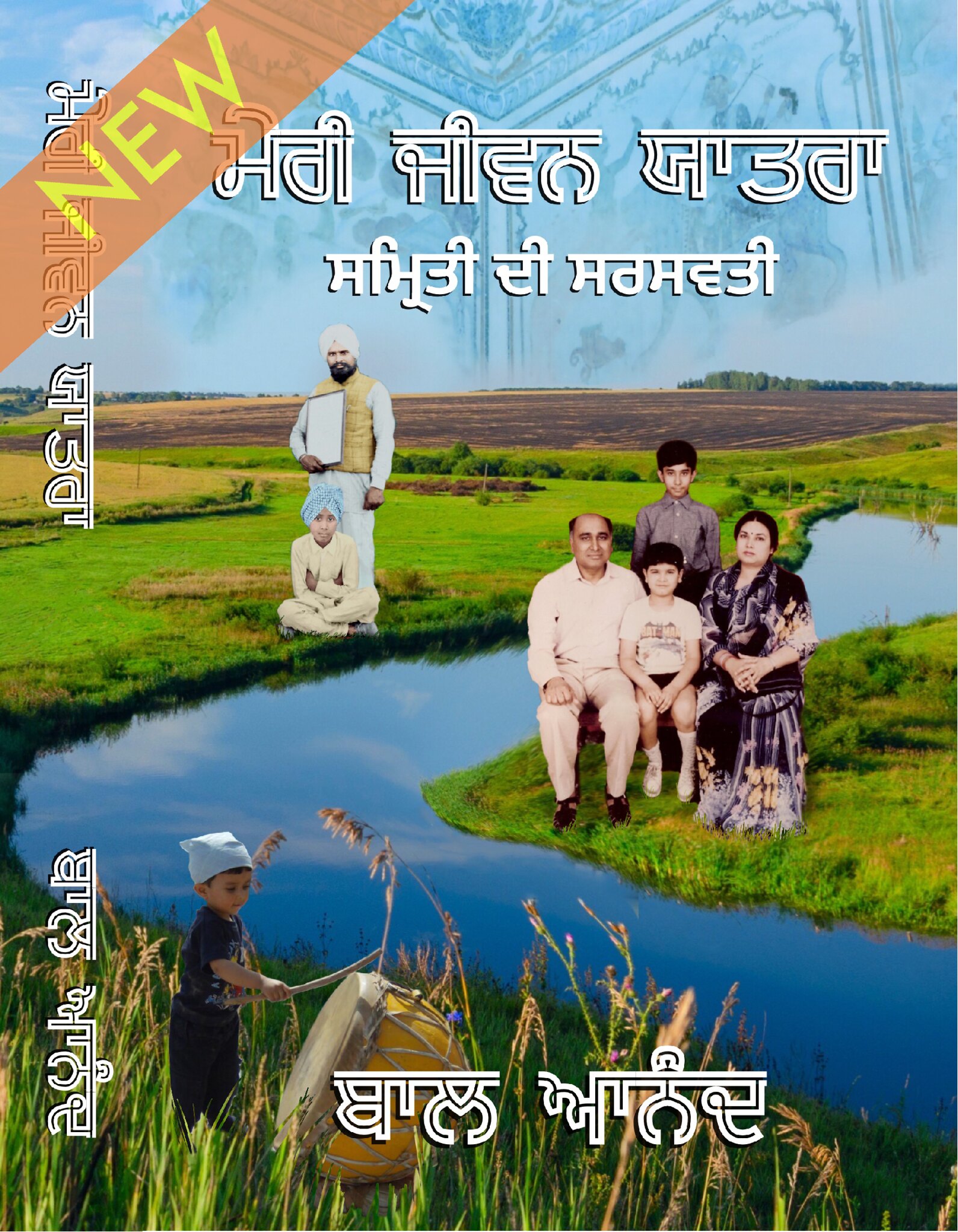
Dear and Esteemed Colleagues,
I presume that you might be interested in the evolving contours in the recent years of Sikhism in its scholastic, spiritual, political and cross cultural dimensions. The subject has indeed assumed significant diplomatic-strategic aspects also of the 'Pilgrimacy' and role of radical elements of the Sikh Diaspora in the context of the global celebration of 550th birth anniversary of Guru Nanak (April 15, 1469 - September 22, 1539) and more particularly of Pakistan's quite unexpected coming forward for the implement - at a lightning speed indeed - of the long cherished 'Sikh psychic dream' of the 'Kartarpur Corridor'.
An institution, named interestingly, 'Centre for Research in Rural & Industrial Development (CRRID)', in Chandigarh, proclaiming its founding to Sh P.N. Haksar's inspiring motto 'ceaseless striving in search of Truth through research' hosted, co-sponsored by Govt. of Punjab and Indian Council of Social Science Research (ICSSR), an 'International Conference on Guru Nanak's Philosophy...' on 7-8 Nov 2019.
I had the pleasure to participate in this conference of eight sessions - with as many as 32 scholars / academicians making their presentations on various subjects related to the Vaani / teachings of Nanak - of the Seminar apart from the inaugural session with keynote address by Prof Murli Manohar Joshi & Presidential remarks by Sh M. Hamid Ansari. The valedictory session was addressed by Dr Manmohan Singh.
The deprivation of 'Khulle Deedaar - Unrestricted Access' to the Sikh Shrines in Pakistan has been the most agonisingly experienced psycho-spiritual wound among the faithful of the dynamic community. The matter has got incorporated in the regular Ardaas - Prayer after every formal religious function. The words are reproduced below:
ਸ੍ਰੀ ਨਨਕਾਣਾ ਸਾਹਿਬ ਤੇ ਹੋਰ ਗੁਰਦੁਆਰਿਆਂ, ਗੁਰਧਾਮਾਂ ਦੇ ਜਿਨ੍ਹਾਂ ਤੋਂ ਪੰਥ ਨੂੰ ਵਿਛੋੜਿਆ ਗਿਆ ਹੈ,
Sree Nankaanaa Sahib tae hor Gurdvaareaan’, Gur'dhaamaan’ dae jinhaan’ thon’ Panth noon’ vichhor-eaa geaa haee
ਖੁਲ੍ਹੇ ਦਰਸ਼ਨ ਦੀਦਾਰ ਤੇ ਸੇਵਾ ਸੰਭਾਲ ਦਾ ਦਾਨ, ਖ਼ਾਲਸਾ ਜੀ ਨੂੰ ਬਖ਼ਸ਼ੋ ॥
Khullhae darshan dee-daara tae sevaa san-mbhaal daa daan Khaalsa jee noon’ bakhsho.
I am taking the liberty of presenting - below - the Paper, running into about 2750 words, presented by me titled, 'Guru Nanak - Poet and prophet of Oppressed and Persecuted'. I was tempted to quote a few parts of it in this covering note - but was dissuaded by the feeling not to make it any longer - and leaving it to you to have a quick look at it - as and when you feel inclined.
Guru Nanak - Poet and Prophet of Oppressed and Persecuted
Bal Anand, Indian Foreign Service (Retired)
All those who have lived through
the last five centuries in the mystically blessed and also terribly tormented ancient lands of
five rivers, and areas lying beyond the adjoining north-western regions of Bharat i.e. India, have indeed been spiritually solaced and sustained by the resplendent eternal presence of Baba Guru Nanak Dev Ji (April 15, 1469 - Sept. 22, 1539 A.D.). During all these years of trials and tribulations wrought upon the people of these lands by their own innate flaws of character or inflicted upon them by the unjust rulers and rampant invaders, ‘
the dhuur ki Baani-the deepest Divine discourse’ of the Guru conveyed in the soul stirring sublime poetry, in their own genuine tongue, has been burning bright for all to enlighten their lives.
2. When the toiling and harmony loving people of Guru Nanak’s beloved Punjab were brutally cut apart, amidst rivers of blood and tears - four centuries after his lifelong mission of healing the wounds of religious and social divides with Divine notes of harmony in knitting humanity together-I too had experienced shivers into morrow of my bones as an innocent child of four years, awkwardly awakening to the cruelest ways of the world, by the soul piercing song in my ‘maan-boli’, which seemed, as if, to convey it all to me, “Nanakaane vall nuun jaandia raahiaa ve, meire Pritam nuun sandesha devin jaa… O dear traveler, journeying towards Nankaana, please do convey the deepest cry of my soul to my beloved Guru…” I need not delve into details of those days of the most barbaric mass murders in history of humanity to which people of Punjab had been subjected when India was proclaimed to have awakened to the long awaited dawn of Independence.
3. While speaking to you all at this moment, ladies and gentlemen, in the city beautiful, I indeed feel acutely conscious about my own odd journey of life spanning seven decades and a half, my obvious limitations to fully fathom and understand the most pious life of the great Guru. In his relentless and epochal search until his last for the ultimate truth and an eternal moral order, more pin pointedly during the last five decades since the world had celebrated the quincentenary of the self-proclaimed ‘Saier- songster (of Supreme Creator) and ‘Neechan andar neech-the lowliest among the lowliest’, one of the most extraordinary poet-prophet of humanity has ever known..
4. Dear Friends, please permit me to start with certain basic facts to elucidate my topic of the day. Firstly, we have to begin with an honest admission that ‘no manuscript in Guru Nanak’s own hand has survived the onslaught of time’. Prof. Pritam Singh, the painstaking scholar of manuscripts, has underlined at length how the pervasive practice of writing anything in Gurmukhi or Devanagri scripts ‘without separating different syntactical units from each other’ has posed a formidable challenge and that ‘readers needed a long period of training to read such text correctly…’ Guru Nanak had, however, most thoughtfully entrusted to his toughest tested successor, Bhai Lehna elevated to be Guru Angad, the manuscripts of his own compositions and also the writings of other likeminded saint poets collated so diligently by him during his wide spread travels and intimate discussions with several of them. A total of 974 hymns - in 19 major ragas i.e. melodies of Indian classical music - attributed to Guru Nanak had been later incorporated in Sri Guru Granth Sahib (SGGS) by Guru Arjan Dev Ji, when he compiled the Granth, sixty five years later. A majority of Guru Nanak’s verse creations are in the form of quatrains and in other popular verse forms - ‘the themes are ethical, philosophical, or devotional and in their totality make up the cosmic vision.’
5. Guru Nanak’s composition titled Japji - the Holy chant - comprising of 38 Pauris, literally 'ladders', implying poetic stanzas, has been rightly adopted as the prayer for recitation at early dawn, known in the Sikh tradition as ‘Amrit Vela-the ambrosial hour’. Japji, opening with invocation to God, has amplified the concept of Supreme Being, with a statement on the nature of God: His uniqueness, Omnipotence, Immortality, etc. and reaffirms His being both Truth and Reality. It concludes with an assertion that knowledge of God is obtained through the grace of the Guru - an enlightened individual. The prominence of this composition has been ‘recognized as such by the Fifth guru, Arjun, when he gave it the first place in the sacred anthology.’ In essence, it is a monotheistic concept of Supreme Being, known in Sikh tradition as, ‘Ek Oankar - One Sole Supreme Being’. Another composition of Guru Nanak for morning recitation is Asa Ki Var, ‘a disquisitional poem of 24 stanzas, interspersed with Slokas (groups of poetic couplets); it denounces falsehood and hypocrisy in the practice of religion in society.’ The Var Majh; in Raga Ram Kali Dakhani Onkar; Solahe (sixteen-stanza poem) in Maru Rag and Sidha-Ghoshti, again in Rag Ram Kali, Guru Nanak expresses his broader thinking over philosophical and ethical issues and points out that meditation - Naam Simran is indeed the true Yoga. The primary purpose of all these verses has been to free the minds of the ordinary people from all types of superstitions and negative social practices.
6. When we turn to the group of four poems, in Raga Asa and Telang, ‘expressing strong indignation of Guru Nanak over the barbarities perpetrated by the invading armies of Babur over the people of Punjab including large scale dishonour of the women-folk’, we come across a rare example of a man of prayer and meditation demonstrating a supreme courage of convictions in denouncing the tyrannical deeds of the ‘the Paap ki janj – marriage party - mafia of sinners coming from Kabul’. The death and destruction during the sack of Lahore for four days in the middle of January 1524 finds mention in the boastful narration in ‘Babur-nama’ by emperor Akbar’s grandfather and the forceful challenging counter narrative in the poems ’Babar-vani’ by Guru Nanak- “Bavarvani phir gayi… Babar’s sway has spread all around; even princes are roaming without food…” The painful plight of people is poignantly pictured by Nanak in another hymn: “O our Lord, our Creator, when there is such killing, such suffering, such pain, so much spilling of blood, so much shrieking, do You not feel pity for the poor!” Guru Nanak’s had felt deeply outraged with the indignities and cruelties piled upon helpless women and expressed their plight with the most graphic poetic images: “Jini siri sohani pattian, mangi paae sandhur - Women whose heads were adorned with tresses; Parting of whose hair was daubed with vermilion; Their locks are shorn with shears, their throats choked with dust… Thou art the Author of all things; Thou seest all. Strange are Thy manifestations!”
7. Guru Nanak - the indefatigable seeker of Mukti - the Salvation of the soul via the pursuit in practice of an honest living following the path of Truth and Nobility - was passionately committed to justice, equality, fraternity and fair play for all. He castigated the rich and powerful for their greed and lust and indulging in atrocities against the poor - he chose to be counted with the clans and classes of Bhai Laalo, the hardworking carpenter friend and Bhai Mardana, a soul mate lifelong musician companion, who was also dubbed to be of low caste even among followers of much acclaimed equalitarian faith of Islam. Here Guru Nanak consciously moved beyond limitations of Bhakti movement and its attendant divide of Nirgun and Sargun i.e. Formless and Formal. He equivocally challenged the hypocritical orders of the day - the caste and rituals ridden Hinduism and unjust and intolerant practices of comparatively recently arrived Islam. Guru Nanak indeed echoed Kabir, “Tu kehta kagad ki lekhi; mein kehta aakhan ki dekhi - you speak of what is written on the paper; I speak of what I have seen with my eyes,” by proclaiming, “Jiho dittha, tiho kiha - I said what I saw.” The inspiration and courage of conviction for Guru Arjan for the inclusion of the verses of the several low caste saints - Kabir, Ravidas, Nama, Sadhna, Sain, etc. - in the Granth Sahib had certainly its sacred fountain source in the integrating spiritual ground so assiduously prepared by Guru Nanak.
8. We have to understand how Guru Nanak had adopted systematic strategy to diagnose the crises of institutions of the contemporary society. He noted quite clearly how the native Hindus had become deeply demoralized and confused and were leading contradictory lives, “Antar Pooja parhi kiteba sanjum Turka Bhai… - inside home you worship (as Hindu), but outside you read other books to impress the Turks; Discard this hypocrisy! Devotion to Name will ensure liberation.” Though the ‘Nirguna’ saint poets had not hesitated to employ blatantly strong expressions to condemn caste distinctions, Nanak, in a rare poetic restraint, preferred to use touching poetic twists to ceremonial practices like the wearing of ‘janeoo - sacred thread’ saying, “Daya Kapah, santokh soot… Out of the cotton of compassion / Spin the thread of tranquility / Let continence be the knot / And virtue the twist there on. O Pandit…” Similarly, Guru Nanak sought to chastise the Muslims to follow their religion as enunciated by their saintly guides and not the sinful rulers,” Musalman kahanu muskilja hoe ta Mussalman kahave / Awwal Aaoli din kar mittha musklmana mal musaave… To be a Mussalman is not easy: only he who is one in reality, should make the claim. Follow first in the footsteps of the saintly; accept their bitter words as sweet… O Nanak, if he extends his mercy to all; treats all living beings as the same - himself a Mussalman he can proclaim.”
9. The most refreshing and relevant notes for his troubled times struck by Guru Nanak pertain to defending the dignity of the womenfolk and underlining biological and societal crucial role of women in the overall scheme of Nature. He condemned extolling of the orthodox Hindu cults of celibacy and renunciation and sought to elevate ‘Grahisatha-life of a householder’ as the noblest obligation ordained by ‘Srijanhar-Supreme Creator’ of the Universe. He was strongly critical of perverted notions among Muslims of treating women as slaves for indulging in animal lust. He emphasized that husband and wife are indeed created equal and that fidelity was enjoined on both. Guru Nanak pictured domestic bliss as a cherished ideal of life and marriage as the metaphor for consummation of love for the Divine. In the Asa ki Var, Nanak rejects the superstition of Sutak - implying that a woman giving birth to child is unclean and impure for a number of days - depending on the caste to which she belongs! In his masterly composition, Nanak says, “Impurity of the mind is greed and the impurity of the tongue is falsehood. The impurity of the eyes is to gaze upon the beauty of another man’s wife and his wealth. The impurity of the ears is to listen to the slander of others…” Nanak proclaims the eternal truth saying, “Within a woman, a man is conceived; to a woman he is engaged and married… through a woman, his future generations come… So why call her bad? From her, Kings are born.” Guru Nanak had condemned the ‘Sati-pratha - wife burning herself on pyre of dead husband’ - he says that it is nobler to live with pious memory of the departed loved one than embracing an unnatural quicker death.
10. Most esteemed friends, in the pointed context of Bharat, we must finally reckon all the reformative social and spiritual movements and their eminent apostles at the altar of the fraternity and equality of people: for their totally unalloyed belief and practice in the equality and justice for the spiritually dehumanized for ages, the so called ‘Shudras - the untouchables’: born to be treated worse than animals according to the glorified scriptures of dubious Divine Origins. Guru Nanak’s travels far and wide for interaction with the leaned scholars of various schools of spirituality including those with humbler origins but higher thinking minds indeed represented a path breaking initiative in the spiritual annals of the world. He castigated the caste distinctions as totally false and vicious man made divides, “Jaanhe jot, naa poochhe jaati - recognize the godly light in all; Braham binnd te sab utpati hoee, maati ek sagal samsaran - The Cosmic minute created it all, the entire creation has the same element.”
11. Following the path lit by Guru Nanak, the assigning of place of honor to the so called low caste Bhakats and Muslim savants in the Granth has been indeed the most admirable example in the history of the holy books of the world. The truest tribute to Baba Nanak, therefore, on the 550th anniversary of his arrival will be the sincerest pledge by all for the total rejection and purging of caste from their lives in all its ugly manifestations: the Sikhism had indeed owed its origin to equality of ‘Sangat in Pangat’ - the pious Congregation in the queue of perfect equality: enough of preaching so far, the hour of action and practical measures beacons us all from Kartarpur! The 550th anniversary of great Guru’s auspicious arrival and 70 years, 5 months and 7 days of his gracing the planet earth indeed deserve to be celebrated by everyone in the world by reflecting over all those days of his life and 974 most precious hymns composed by him to illuminate mind and soul: they are like the shining pole stars in the arduous and complex voyage by human beings in this complex world. Guru Nanak indeed exults in concluding several of his hymns, saying, “Nanak, Saier eva kahiya-thus spake, Nanak, the poet” - indeed a rare example by a spiritual master to proclaim himself a bard of Almighty! Guru Nanak was a gifted reconciler of religious and cultural differences; in a way, he foresaw the plural and multicultural destiny of India. It is no surprise why Dr BR Ambedkar had deeply admired Sikhism as a great faith practicing equality and justice and an ideal option for his people oppressed and persecuted in the name of sacred scriptures. The Nanak community has to do ‘Atam-manthan i.e. self-scrutiny to rededicate itself to eternal values of hard work, devotion, truthful living and self-sacrifice.
12. To conclude, dear friends, I may kindly be pardoned for re-striking some intimately personal notes. I recall how since my early childhood, the Gurpurab - ‘Kattak di Pooramashi, mela Nakane da’ - falling exactly a fortnight after Deepawali on Amavas, was a soul stirring festival - commemorating not any distantly mythological event but historically well documented happening of the arrival of a godly person who had no claims to any name, fame or kingdom. My pious grandmother, with always prayers on her lips, gave me ‘Gutika - a sacred booklet’ to recite, as soon as I had learnt the Gurmukhi alphabet; my initiation to Japji, Rehraas and other verses of ‘Nitnem-daily prayer’ began during years of my profound innocence. Grandfather was also not behind the scene and tried to smarter by making me soon learn ‘Hanuman Chalisa’ by heart. From a sleepy village in a small state of Muslim Nawab, the family moved to a newly emerging neighbouring town in 1951. The most impressionable first writing inscribed on a wall to be read by me was on the roadside water tank of the Gurdwara meant for animals, saying: “Sewa Kraee 500 Rupaye, His Highness Nawab Iftikhar Ali Khan Sahib of Malerkotla”. I soon understood how Guru Nanak was indeed for all faiths and all ages; children played games, shouting, “Amba Vali kothri, Anaaran Vala Vehra; Babe Nanak da Ghar Kehra?” My generation has indeed grown up shaping our sensibilities about teachings of Nanak by particularly relating them to various contours during the march of the nation since the celebration of quincentenary of his birth. Incidentally, the grand success of feature film ‘Nanak Naam Jahaj hai’ and the regular reports of excellence of the University founded in his name in Amritsar come instantaneously to my mind.
13. Esteemed Friends, exactly half a century after half the millennium of birth of Guru Nanak, our country and our world have indeed been witness to amazingly spectacular changes of the technological and socio-psychological kind. Humanity would seem to be confronted with more and more complicated challenges - including even the sheer survival of the human race on the only planet known so far to house humanity! Personally, I had never dreamt that I would be destined to trot the globe in the service of motherland, including 777 days of the ‘Tapasya-Pious Act’ of the duty in the sacred soil of the holy footprints of Nanak i.e. Nankana Sahib, Panja Sahib and 26 other ‘Guru Nanak – Dhams’ and in addition the birth place of Guru Ram Das; eight sacred spots associated with Guru Arjan and 12 with Guru Har Gobind were officially recorded by Govt. of Pakistan in 1962. I and my wife had the good fortune of roaming about in the streets of Dera Baba Nanak on March 12, 2012 - and were, by grace of Guru, luckier even in locating the long left home of birth of my wife in ‘Guru ki Nagri’. While we were having, via ‘doourbeen-telescope’, ‘Darshan-holy sight’ of Gurdwara Darbar Sahib of Kartarpur, we had not visualized that the realization of ‘historic dream’ was around the corner and that a new glorious destiny was awaiting Dera Baba Nanak and Kartarpur Sahib.
14. Guru piari Saadh sangat ji - Guru’s beloved and blessed congregation before me, lastly, let us hope and pray that in spite of various attendant odds, the Kartarpur Corridor would indeed inaugurate many new flood-lit gates for the forcibly separated people of the land of five rivers, longing for ever to live in love, peace and prosperity for all! The ‘Gurmukhs’- people of Guru’s grace - indeed look forward to the time when they would also be able to roam about as free spiritedly as their Guru had in his own epoch, singing hymns composed by him for all and for eternal Time - with ‘sarbatt ka bhala-welfare of all’ on their lips and in mind and soul!
* * *


 Blog Feed